#064
Dubu-jorim두부조림
Braised Tofu
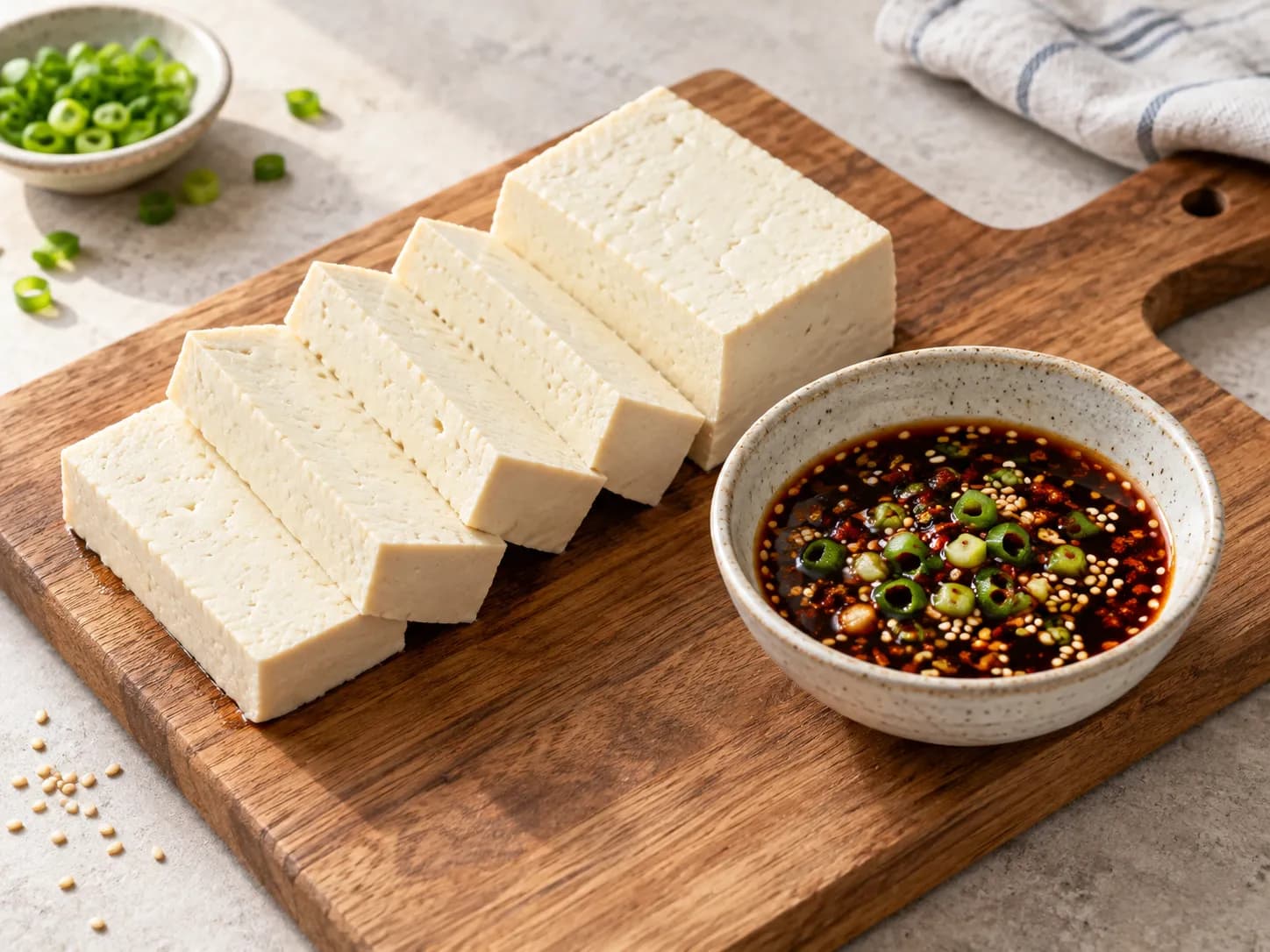
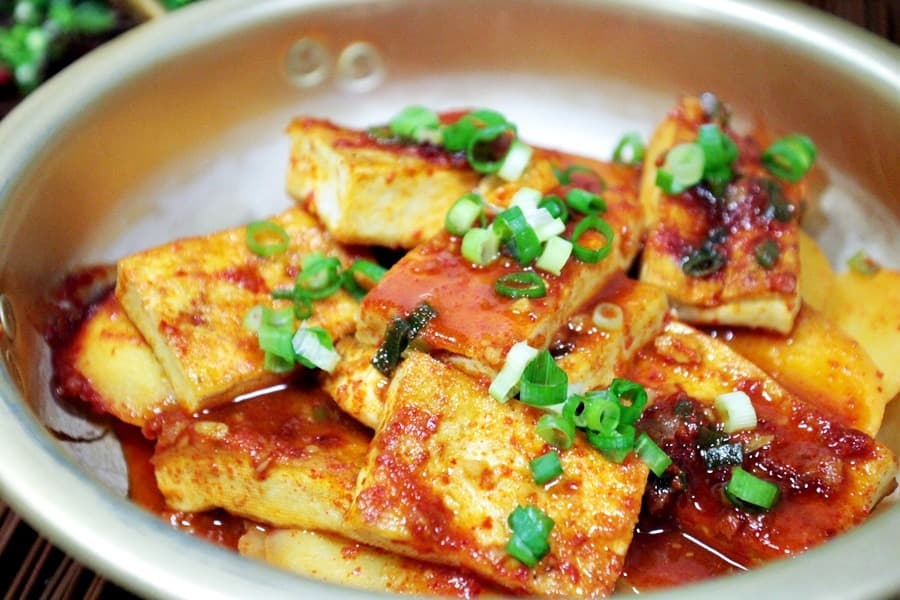
Pan-fried tofu simmered in a savory soy and chili sauce.
History & stories
No one knows exactly when tofu reached the Korean Peninsula. The word dubu (두부) first appears in Korean writing in a poem in Mogeunjip, the collected works of the late-Goryeo scholar Yi Saek, which suggests it came from Yuan-dynasty China, Goryeo's busiest trading partner at the time. In the poem, the writer, long tired of plain vegetable porridge, finds that tofu brings a welcome new flavor to his meals.
Joseon became known for its tofu-making skill. The Annals of King Sejong record that in 1434 the Ming emperor praised the cooking of women sent from Joseon, singling out their tofu as especially fine. Royal tombs had temples assigned to make tofu for memorial rites, known as joposa (造泡寺), "tofu-making temples." The writer Heo Gyun noted in Domun Daejak that the tofu made by people just outside Seoul's Changuimun Gate was soft and smooth beyond words.
Long loved, tofu appeared on banquet and ancestral-rite tables alike, and today it is one of the most common ingredients in everyday soups, stews and pan-fried dishes. The word jorim, for food simmered down in seasoning, first appears in a jang-jorim recipe in the cookbook Siuijeonseo; scholars think it is missing from earlier cookbooks simply because dish names weren't yet so finely divided. Dubu-jorim (두부조림) is counted among the classic tofu dishes, along with tofu soup, tofu jeon and steamed tofu.