
#065
Gyeran-mari계란말이
Rolled Omelette
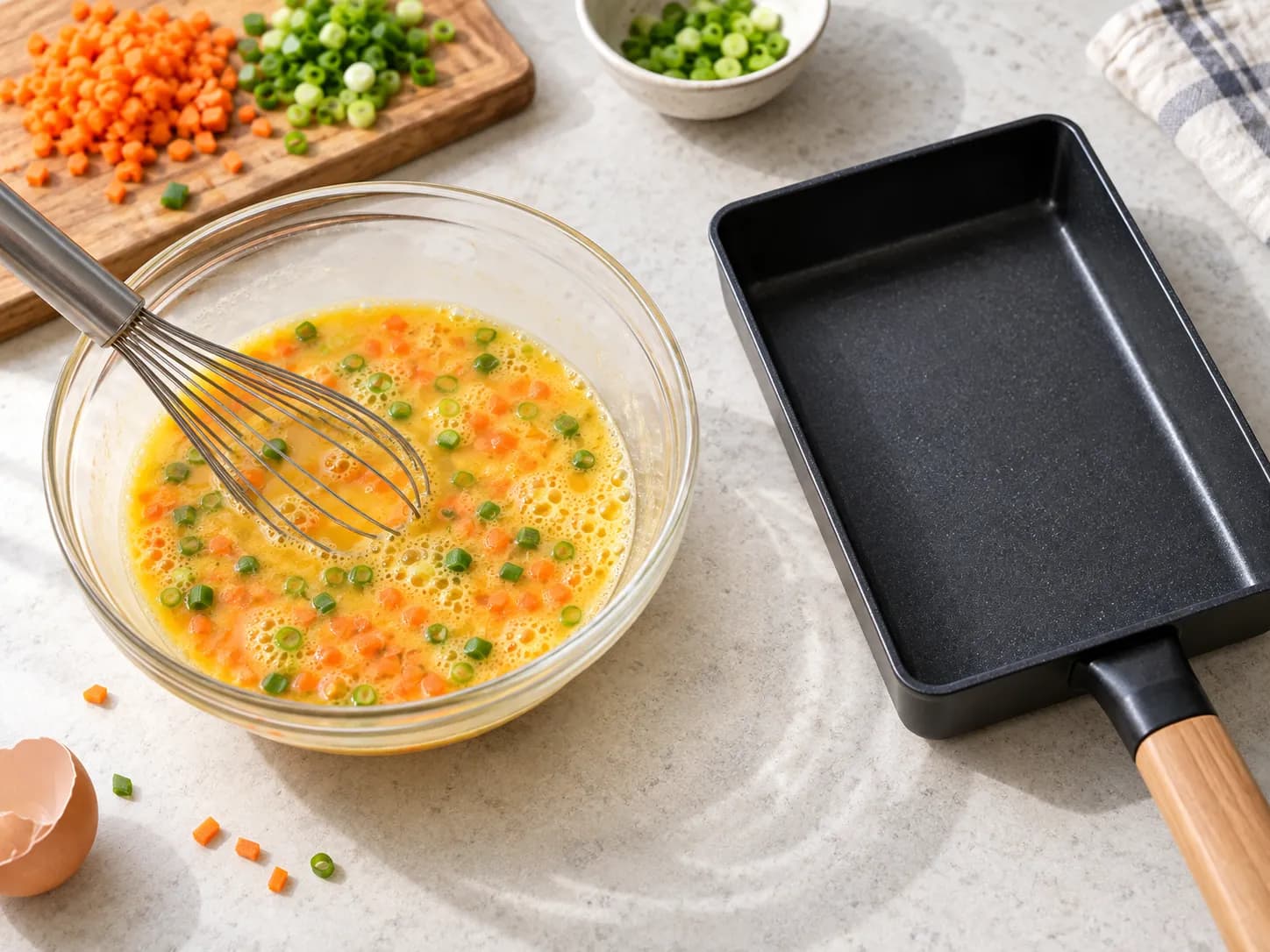
A layered omelette rolled with chopped vegetables and sliced into rounds.
History & stories
Gyeran-mari (계란말이) takes its name from its shape: mari means "roll." Today's version isn't found in old books, but close relatives appear in late Joseon-era cookbooks. In Juchan, a dish called gyeranbyeong begins with a thin sheet of egg fried in an oiled pan. While it is still warm, it is wrapped around a dumpling-style filling of minced fish, chopi pepper and ginger, then dipped in vinegared soy sauce mixed with ginger and scallion.
A cookbook from the late 1800s, Eumsik Bangmun, describes gyeran neureumi: egg beaten with a pinch of salt is spread thin, topped with filling, rolled into a long log and fried, then threaded on skewers and served with a sauce. Thin egg sheets had other jobs too. As jidan they became a garnish laid on top of dishes, and folded around a filling they made alssam, a small egg wrap. Wrapping and rolling with thin-fried egg, in other words, has long been part of the Korean kitchen.
There was a time when even a boiled egg was a special treat for picnic days, yet rolled omelette was a lunchbox regular for generations. It is cut into long strips for gimbap, and cooks roll in laver, cheese or perilla leaves for variety. These days it is also a popular drinking snack on restaurant menus.