#063
Gamja-jorim감자조림
Soy-braised Potatoes
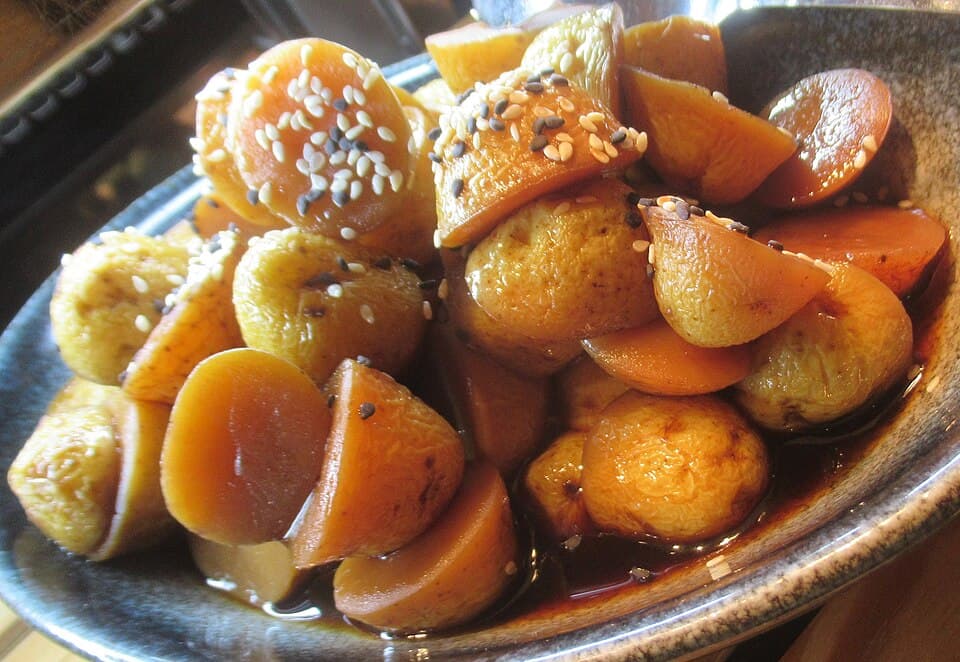
Potato cubes simmered in sweet soy sauce until glossy.
History & stories
Potatoes are relative latecomers to Korean cooking. According to Yi Gyu-gyeong's Oju Yeonmun Jangjeon Sango, they first arrived in the Gwanbuk region (roughly today's Hamgyong provinces in the far north) around 1824 to 1825, in the reign of King Sunjo, and because they came from the north they were called bukjeo (北藷), "northern tuber." One story says Qing Chinese who crossed the border to dig for wild ginseng planted potatoes in the mountains, and the crop spread to Koreans from there.
Potatoes didn't need much fertilizer and stood up to both drought and monsoon rains, so they spread fast. By 1847 they had reached Jeolla, Gyeonggi, Chungcheong and Gangwon, outpacing the sweet potato, which had arrived some 60 years earlier. Officials welcomed them as a famine crop, and as late as the early 1980s, potato farmers grew them mostly to feed their own families rather than to sell.
When gamja-jorim (감자조림) first appeared on Korean tables isn't clearly recorded. Even the word jorim, for food simmered down in seasoning, is newer than you might think; its first known appearance is a recipe for jang-jorim in the cookbook Siuijeonseo. At the Joseon court, it is said, such dishes were called jorigae or jorini. Soy-based jorim is made with meat and fish but also vegetables such as green chilies and potatoes, and of all of them, gamja-jorim has become one of the most familiar home side dishes.