
#055
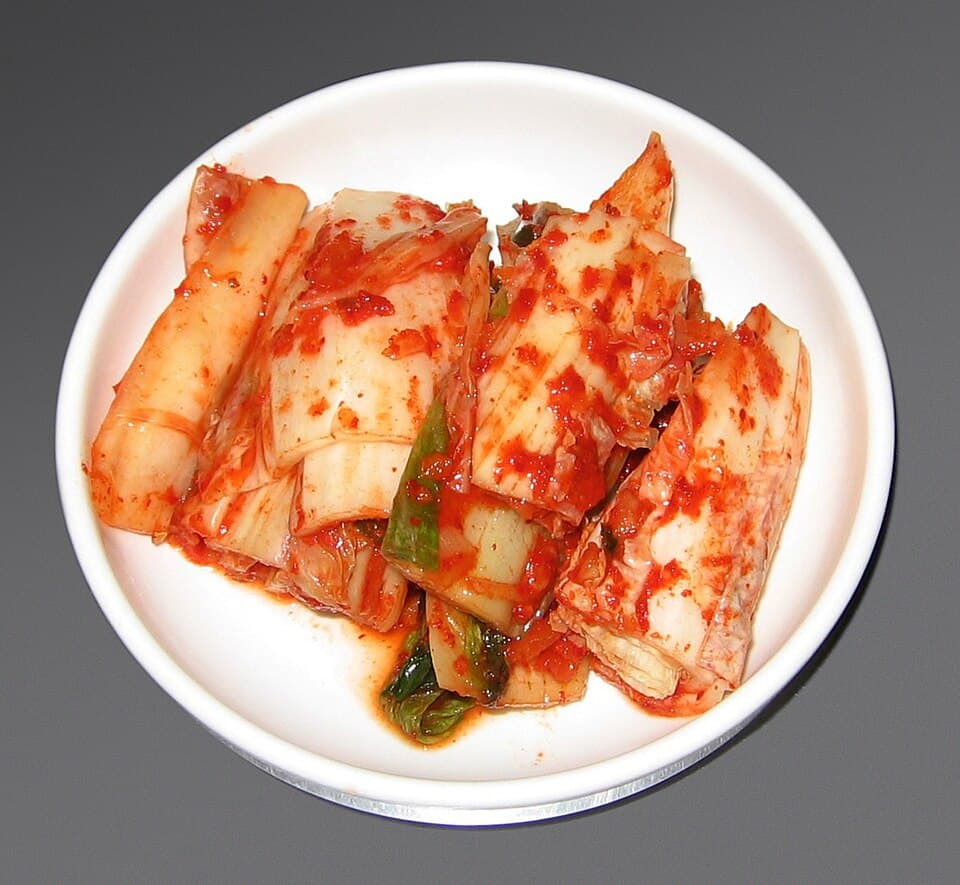
Baechu-kimchi배추김치
Napa Cabbage Kimchi
Napa cabbage fermented with chili, garlic and salted seafood. The most familiar kimchi.
History & stories
Kimchi has a long history, but today's red napa cabbage kimchi is a surprisingly recent look. A poem by the Goryeo-era writer Yi Gyu-bo describes turnips salted to serve as side dishes all winter long, one of the early references to kimchi in Korean writing. As for the word itself, one theory traces "kimchi" back to chimchae (沈菜), which shifted through forms like timchae and dimchae over the centuries.
The big turning point was the chili pepper, which reached Korea in the mid-Joseon period. Kimchi made with chili first appears in writing in the 1766 book Jeungbo Sallim Gyeongje, and kimchi as we know it is thought to have taken shape in the 19th century. Even the cabbage changed: tightly packed, heading napa cabbage has been on Korean tables for only about a century, and until the 1960s many households still made kimchi with semi-heading varieties such as Seoul and Gaeseong cabbage.
Kimjang, making a whole winter's supply of kimchi at once in late autumn, is an old custom too. The 1849 almanac Dongguk Sesigi already named it, together with making soy sauce and pastes, as one of the two big household events of the year. In 2013, "Kimjang, making and sharing kimchi in the Republic of Korea" was inscribed on UNESCO's Representative List of the Intangible Cultural Heritage of Humanity, honoring the way families and neighbors gather to make and share it.