
#097
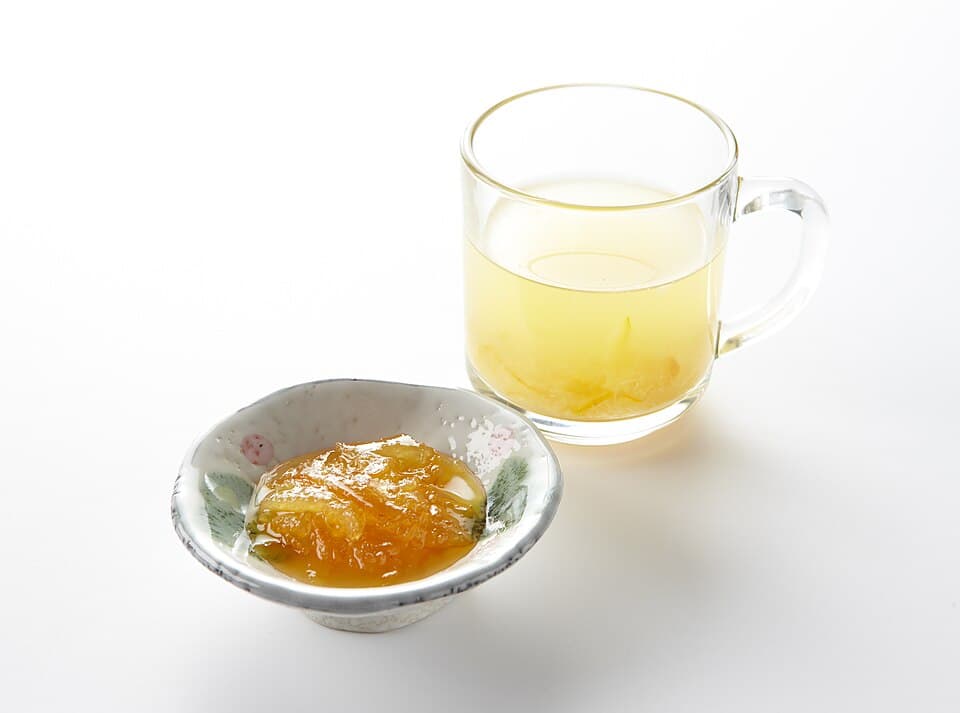
Yuja-cha유자차
Citron Tea
Sweet, fragrant tea made from yuja citrus preserved in honey or sugar.
History & stories
Yuja (유자), a fragrant citrus, is native to the upper Yangtze River in China and is believed to have reached Korea during the Unified Silla period. Goryeosa, the official history of Goryeo, records that yuja was set on the ritual table at the Palgwanhoe festival, alongside tangerines, in the reign of King Chungnyeol. In 1426, King Sejong of Joseon ordered trial plantings in coastal districts of Jeolla and Gyeongsang provinces, and yuja was later sent to the court as tribute from Jeju and southern coastal towns such as Goseong, Namhae, Jangheung, Jindo and Haenam. The trees do not tolerate cold well: the Annals of the Joseon Dynasty preserve a report that in 1796 a harsh wind and freeze killed every yuja tree in Geoje, Goseong and Namhae, disrupting the tribute.
The aromatic peel was used to flavor fruit punches, candied fruit and even sikhye. Thinly sliced yuja packed in a jar with honey or sugar releases a clear syrup after two or three weeks, known as yuja-cheong. Spoon some of it into a cup with a few slices of fruit, pour in boiling water, and you have yuja-cha, sometimes topped with pine nuts.
Yuja growing in Korea was small-scale until the early 1980s, then took off from the mid-1980s, and by the mid-1990s Korea was at one point the world's largest producer, ahead of Japan. Yuja is still grown mainly along the southern coast and is the only native Korean citrus grown on an industrial scale.