#098
Omija-cha오미자차
Five-flavor Berry Tea
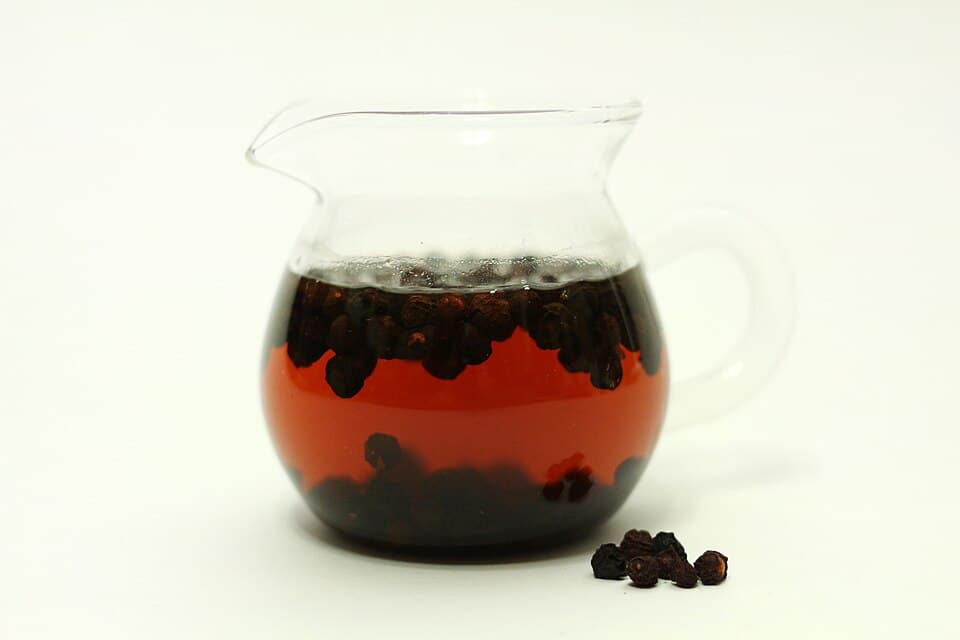
A ruby-red tea of magnolia berries said to taste sweet, sour, salty, bitter and pungent.
History & stories
Omija (오미자, 五味子) means "five-flavor berry," and the name comes from the many tastes packed into one small fruit. Gyuhap Chongseo, a household encyclopedia written by Lady Bingheogak Yi, explains that the skin and flesh are sour and sweet while the seeds are bitter, pungent and salty. Even so, the first thing you notice is a sharp sourness. The vine grows wild in mountain valleys and bears red berries in autumn, which are picked around Chuseok and dried in the sun. Omija was prized early on; old Chinese herbal texts are said to have praised the quality of Korean-grown berries.
Omija was loved not only as a tea but as the base of hwachae, the traditional fruit punch. Old-style hwachae started from omija liquid, fruit juice or honey water, and one recorded drink, garyeon sujeonggwa, floated starch-coated lotus petals and pine nuts in omija liquid. Omija also gave a soft pink color to sweets such as starch dasik, and Gyuhap Chongseo even describes making a vinegar from omija for dyeing cloth red with safflower.
To make the tea, the dried berries are simmered slowly in water, or ground and stirred into hot water, then sweetened with sugar or honey. Today the berries are grown widely in places such as Mungyeong in North Gyeongsang Province and Danyang in North Chungcheong Province.