
#034
Tteokguk떡국
Rice Cake Soup
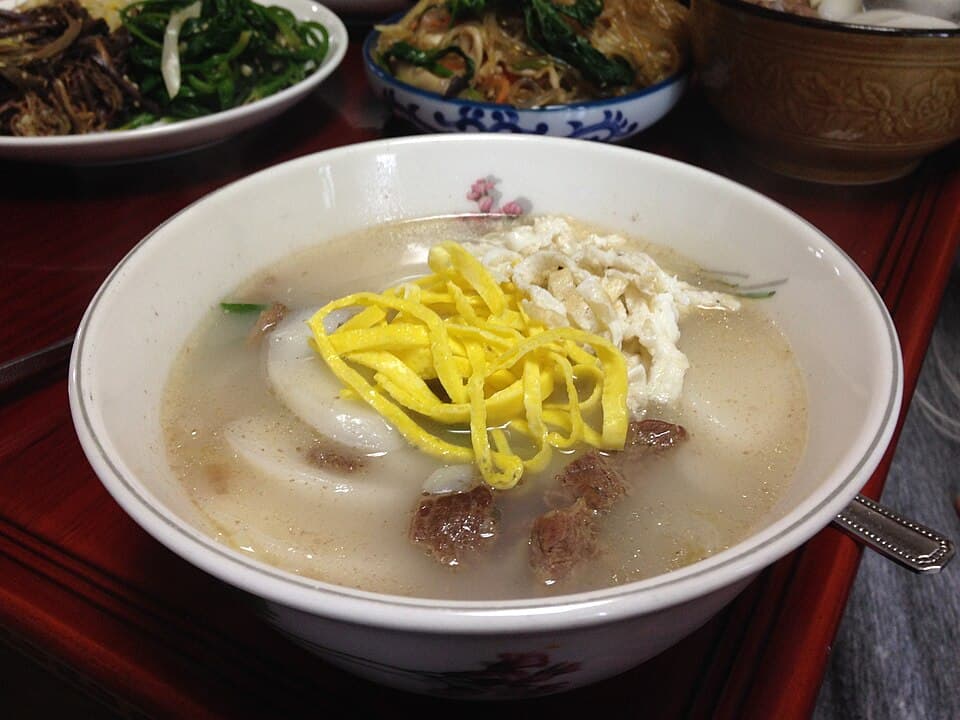
Sliced rice cakes in a clear broth, eaten on New Year's Day to turn a year older.
History & stories
Koreans like to say you only truly turn a year older once you have eaten your bowl of tteokguk (떡국) on Lunar New Year's morning. The seasonal almanac Dongguk Sesigi calls it baektang, "white soup," for its color, and byeongtang, "rice cake soup." Because people would ask someone's age with "How many bowls of byeongtang have you had?", it also earned the nickname cheomsebyeong, "the rice cake that adds a year."
No early record pins down when the custom began. The writer Choe Nam-seon suggested in Joseon Sangsik Mundap that it descends from food shared after ancient New Year rites. According to Dongguk Sesigi and Yeolyang Sesigi, tteokguk was indispensable for the New Year ancestral rite and the holiday table: everyone ate it on New Year's morning and served it to visitors. Making the rice cake was real work. Before machines, men pounded steamed rice with wooden mallets in the yard and stretched it into long bars by hand, and as late as the 1950s to 1980s families carried soaked rice to the neighborhood mill at year's end and waited in line for steaming lengths of garaetteok.
The finest broth was once made with pheasant. When falconry became an aristocratic pastime in the late Goryeo period, tteokguk made with hawk-caught pheasant was a delicacy, while households that couldn't get pheasant used chicken, a literal case of the Korean saying "chicken instead of pheasant." Today beef broth is the norm. Gaeseong is known for joraengi-tteokguk with cocoon-shaped rice cakes, Chungcheong for saeng-tteokguk, and across the sea Japan has its own New Year rice-cake soup, ozoni.
