
#033
Miyeok-guk미역국
Seaweed Soup
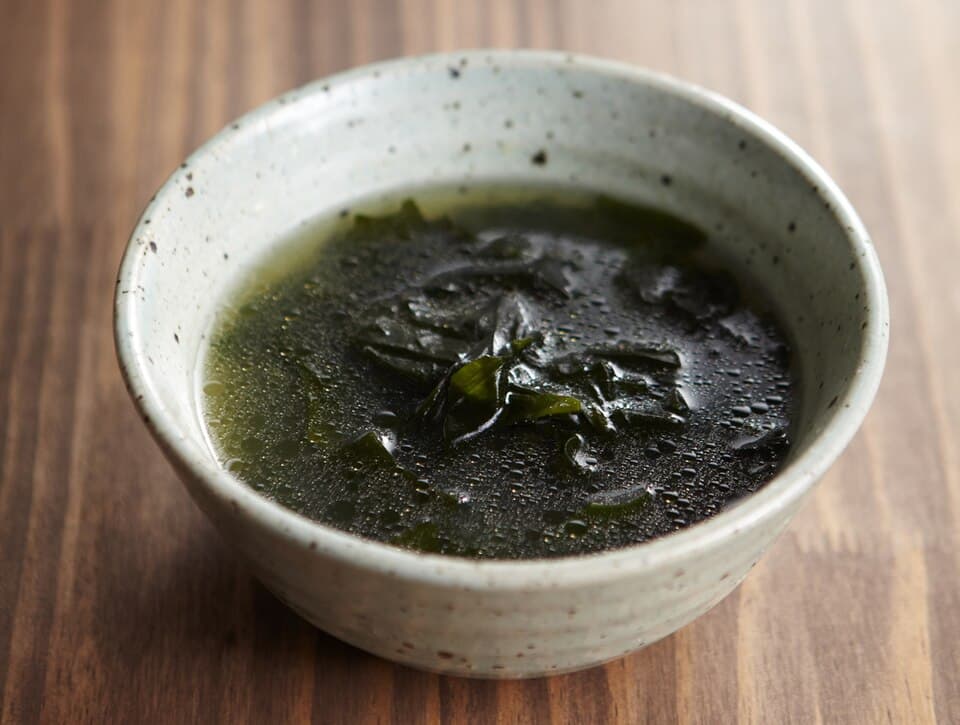
A light soup of sea mustard and beef, eaten on birthdays and after childbirth.
History & stories
Serving miyeok-guk (미역국) to new mothers is a long-standing Korean custom. One old story, said to be recorded in the Tang-dynasty compendium Chuxueji by Xu Jian, tells of people who saw a whale eating seaweed after giving birth and began feeding seaweed to women after childbirth. Writing about Joseon-era households in his Joseon Yeosokgo, the scholar Yi Neung-hwa noted that families prepared a straw mat, diapers, rice and seaweed before a birth. Once the baby arrived, three bowls each of seaweed soup and rice were set out in the southwest corner of the room as an offering to Samsin, the spirit believed to grant children, and after the rite the mother ate the food.
Seaweed bought for a new mother was called haesan-miyeok, "childbirth seaweed": people paid the asking price without haggling, and it was tied with straw rope rather than folded, since breaking it was thought to "cut short" a life. Birthday miyeok-guk appears in newspaper articles from the 1930s, and as dried seaweed production grew from the 1970s, more and more people came to feel that a birthday breakfast needed a bowl of it, a habit Korean immigrant families carried with them to the United States.
Because seaweed is slippery, some people avoid it before an exam or a big day, worried that things will slip away too. That is why failing a test is jokingly called "eating seaweed soup." The broth is usually made with beef, but coastal areas may use fish such as flounder, tilefish or dried pollack instead.
