#070
Sundae순대
Korean Blood Sausage
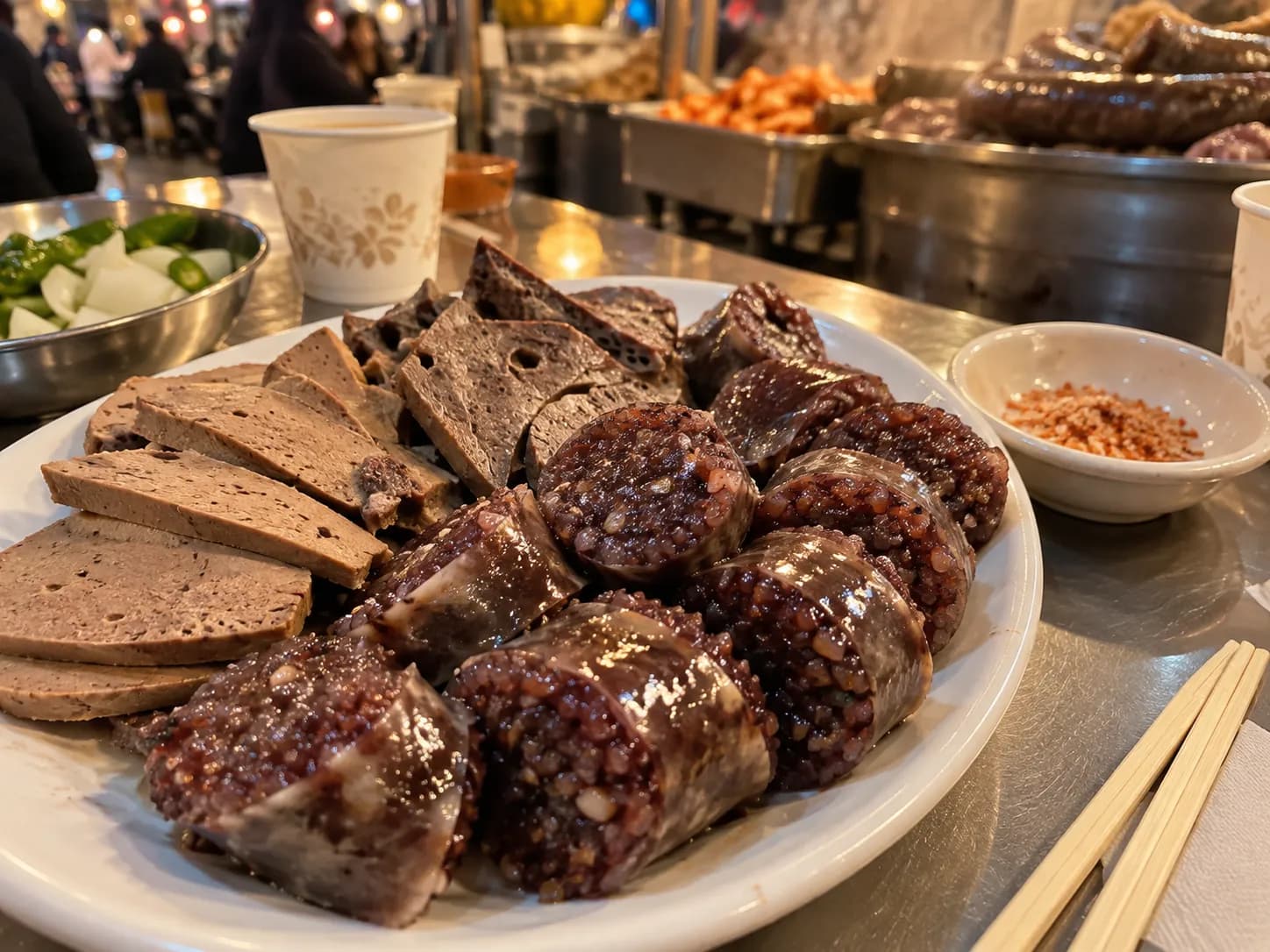
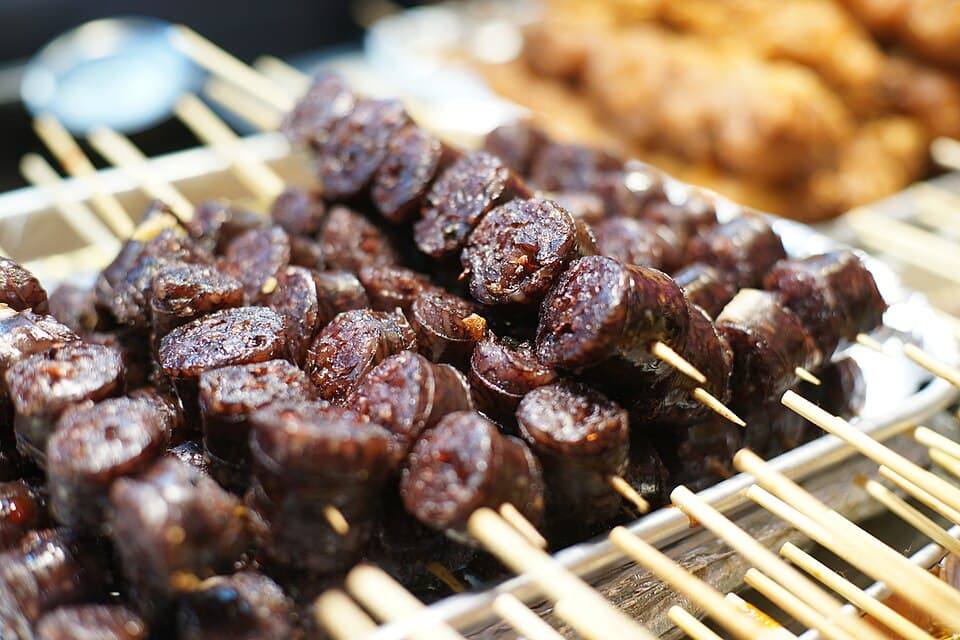
Pork casing stuffed with glass noodles and pork blood, steamed and sliced.
History & stories
Stuffing an animal's intestine with blood and meat is an old idea. The ancient Chinese farming manual Qimin Yaoshu describes filling a sheep's intestine with sheep's blood and meat and boiling it, and scholars infer that Koreans, too, made sundae (순대) from early on. Late Joseon cookbooks list related dishes: Gyuhap Chongseo has steamed stuffed beef intestine, and the 19th-century Siui Jeonseo has "doyaji sundae" (pork sundae) and "eogyo sundae."
Pork intestine is the most common casing, but there are sundae made with fish and squid as well. In Hamgyeong Province, dongtae sundae is pollack stuffed through the belly, frozen and steamed when needed, while Gangwon Province has ojingeo sundae, stuffed whole squid. Sokcho's abai sundae was created by refugees from South Hamgyeong Province who fled south during the Korean War's January 4th Retreat and settled together in Cheongho-dong. Adapting the sundae of their hometowns, they stuffed large pork intestine with glutinous rice, blood and mung bean sprouts and steamed it.
Cheonan's Byeongcheon sundae grew up in the Aunae market. When a pork-processing plant opened in Byeongcheon-myeon in the 1960s, locals began making sundae from the innards left over from ham production, and sundae spread through the market. Unlike the common glass-noodle sundae, it uses little or no glass noodles and plenty of blood and glutinous rice.