
#069
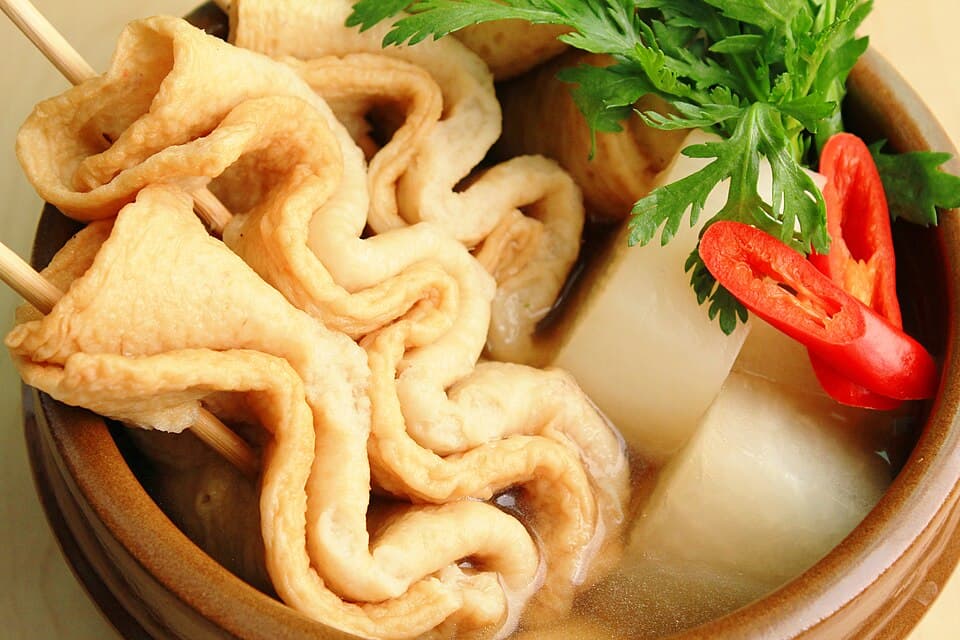
Eomuk어묵
Fish Cake Skewers
Fish cakes on skewers simmered in a light broth. Busan is famous for them.
History & stories
Eomuk (어묵), fish paste mixed with a little salt and starch, shaped and cooked until firm, is generally traced to Japanese kamaboko. Korea's own records first mention something similar in the 1700s cookbook Somun Saseol, under the name gamabogot. That dish was quite different, though: fish was spread into a thin sheet, rolled around a filling of meat, mushrooms and sea cucumber, and boiled. It reappeared in the 1938 cookbook Joseon Yoribeop under the name taegeukseon.
The fish cake we know today spread after Korea opened its ports, as more Japanese residents settled in the country. During the colonial period, Japanese-run fish cake shops operated in Busan's Bupyeong Market, and after liberation in 1945 the first Korean-owned fish cake factory opened. When refugees poured into Busan during the Korean War, fish cake makers boomed. Some fried their products in oil vats made from U.S. Army drums, using sardine or whale oil.
In Busan, the cheap drinking houses where people sat over bowls of fish cake soup became the city's living rooms, places to gather and talk. In 2007 Busan added fish cakes to its list of premium seafood brands, and from around 2014 more shops began displaying handmade fish cakes, such as fish cake croquettes, like loaves in a bakery. The Japanese loanword odeng was long ago replaced by the Korean word eomuk, yet people still use odeng every day.
