
#011
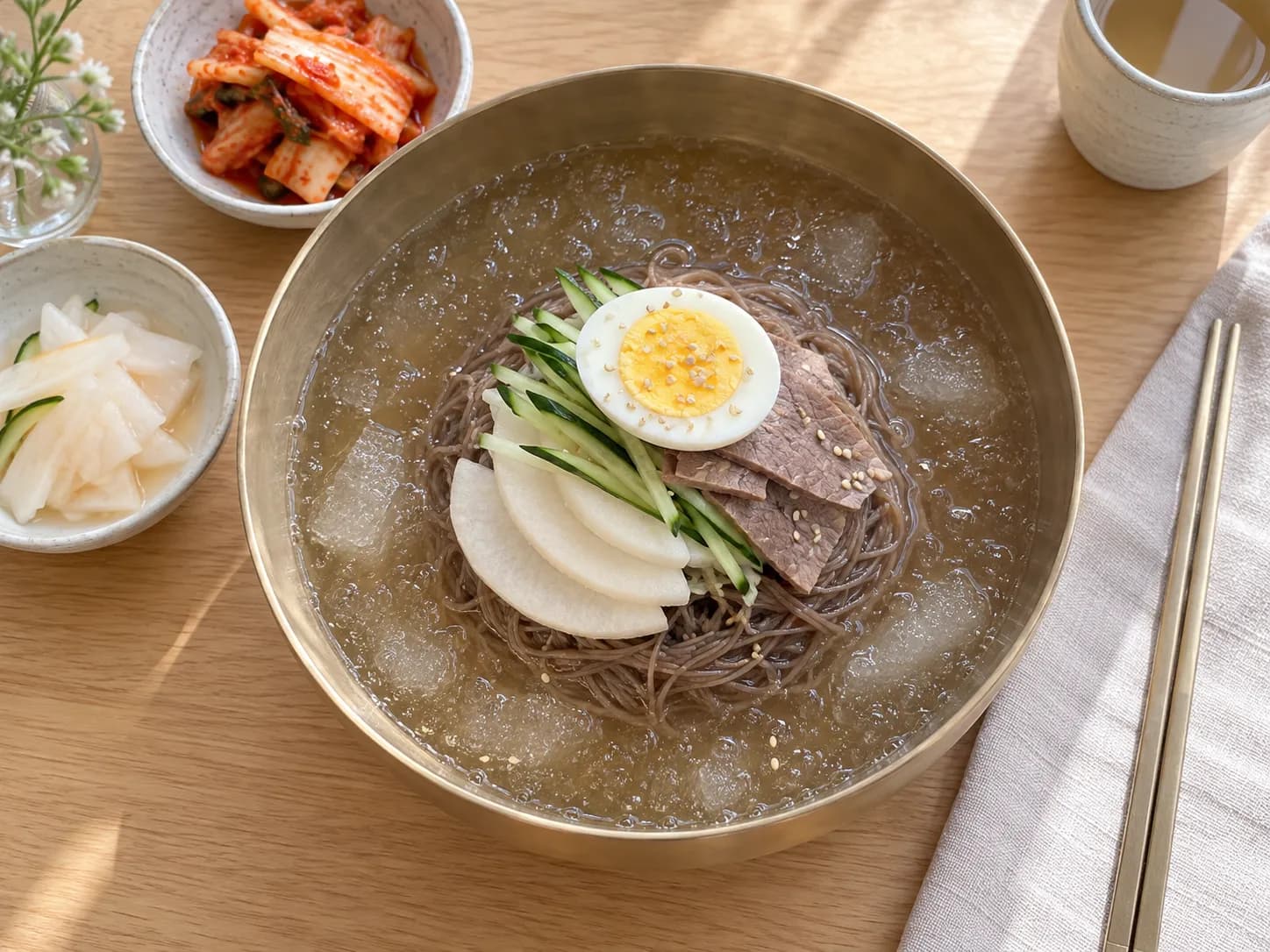
Naengmyeon냉면
Cold Buckwheat Noodles
Chewy buckwheat noodles served in an icy, tangy broth.
History & stories
Naengmyeon (냉면) grew up in Korea's northern provinces, where buckwheat was plentiful. It is mentioned in the 19th-century almanac Dongguk Sesigi and in Jinchan Uigwe, records of royal banquets, so it is believed to have been enjoyed since the Joseon era. Today it is a summer favorite, but Dongguk Sesigi listed it, surprisingly, as a seasonal dish for winter.
The reason lies in the ingredients. Buckwheat was harvested in early winter, and pigs, chickens and pheasants were slaughtered or hunted in the quiet farming months of winter. Winter was also when dongchimi, a crisp radish water kimchi, was at its icy, tangy best for pouring over noodles. The poet Baek Seok celebrated just that in his 1941 poem "Noodles" (국수), praising dongchimi broth ripened on winter nights and fresh mountain pheasant. Pyongyang naengmyeon was famous early on, too: a 1929 issue of the magazine Byeolgeongon carried a piece devoted to it.
The dish splits into regional styles. Pyongyang naengmyeon was once made with pheasant broth; Hamhung naengmyeon uses noodles of potato starch, a staple of Hamgyong Province; and Jinju naengmyeon uses pure buckwheat. After the Korean War, people who came south from the North carried naengmyeon with them, and it spread across the whole country.
Change history
From the community
Kinds · Pick a kind to see posts about it.