
#017
Janchi-guksu잔치국수
Banquet Noodle Soup
Thin wheat noodles in a light anchovy broth, traditionally served at celebrations.
History & stories
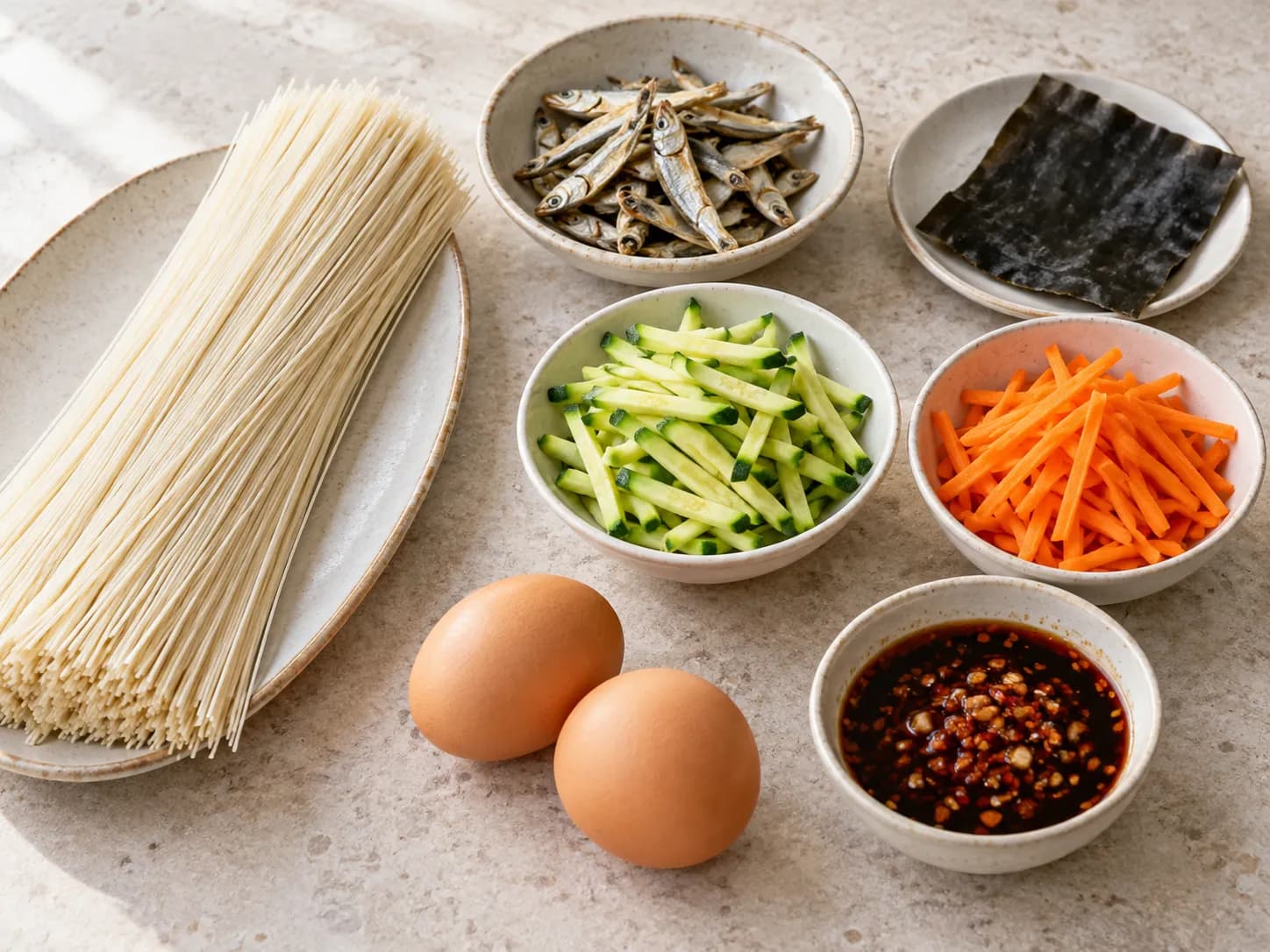
Noodles are an everyday food in Korea today, but when wheat was scarce they were a rare treat. Gaoli Tujing, an old record of the Goryeo period, notes that flour was so expensive it was eaten only at weddings. Add the belief that long, unbroken strands stand for a long life, and noodles became the signature dish of happy occasions such as birthdays, 60th-birthday banquets and weddings. Serving noodles at a wedding is said to express the hope that the couple's bond will last just as long. Even now, asking someone "When are you going to treat me to noodles?" is a playful way of asking when they plan to get married.
Noodles entered daily life in modern times. From the 1900s, rotary pressure noodle machines made dried wheat noodles widely available, and anchovy-broth noodles (myeolchi-guksu) caught on after the start of the Japanese colonial period. After the Korean War, aid flour and cheap imported wheat made noodles something anyone could eat any day. The former feast dish turned into a simple snack for farm workers in the fields, with just broth poured over or a little seasoned soy sauce on the side.
Janchi-guksu (잔치국수), "banquet noodles," later found new fans as market food, sold under names like "market noodles" and "anchovy noodles" in markets, college neighborhoods and city centers. Many community events still serve it to guests, keeping alive its old meaning of celebration and long life.