#087
Injeolmi인절미
Soybean Powder Rice Cake
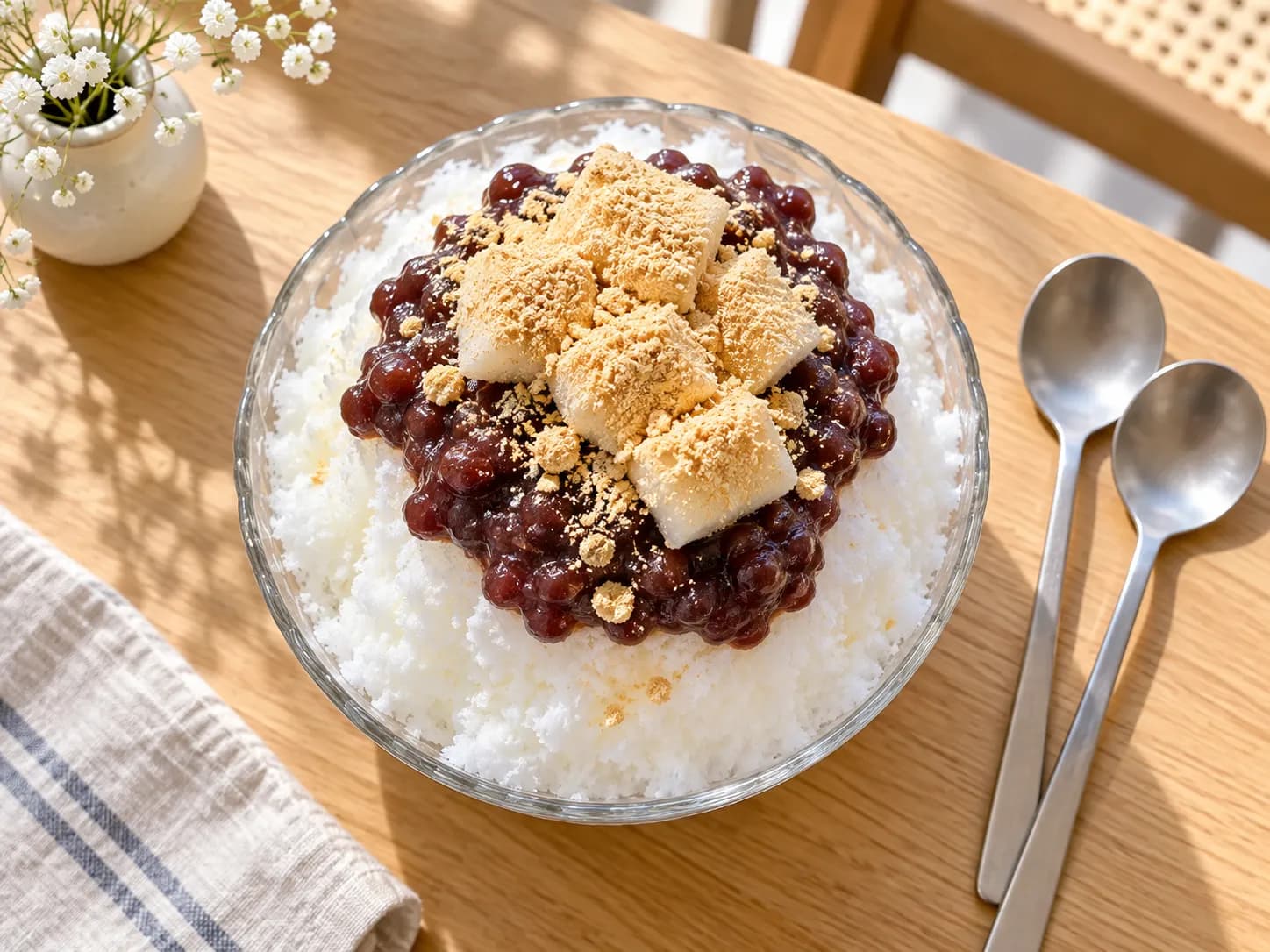
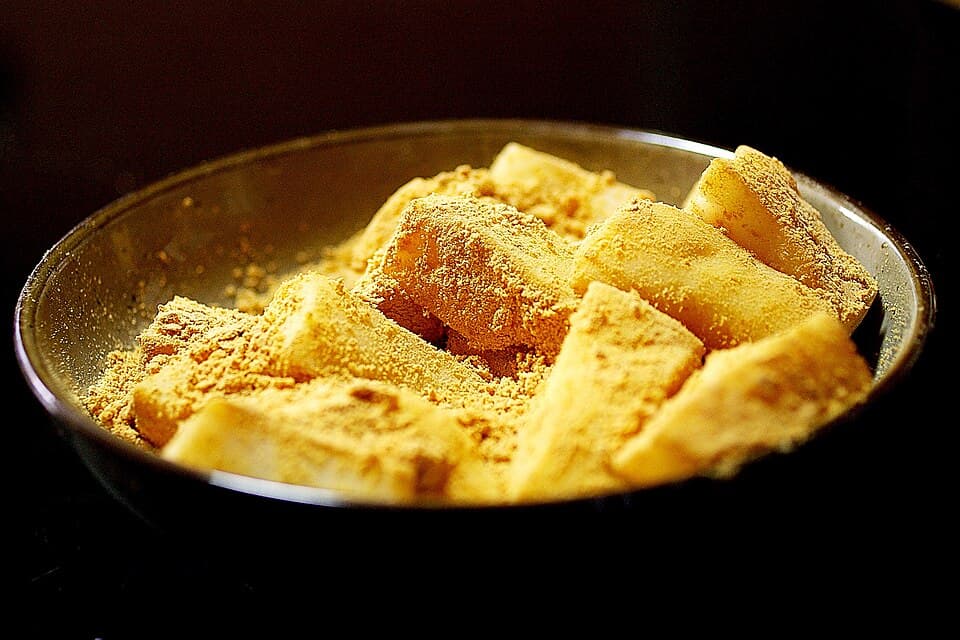
Chewy pounded glutinous rice cake coated in roasted soybean powder.
History & stories
Injeolmi (인절미) belongs to the family of dobyeong (擣餠), rice cakes made by pounding steamed glutinous rice with a wooden mallet. Because it appears among ritual foods of the Goryeo period, its history is thought to be quite long. The cookbook Gyuhap chongseo advised polishing the rice until it shone like jade, washing it a hundred times, soaking it in warm water for four or five days and steaming it until soft, which keeps the finished cake smooth and free of lumps. Only pure glutinous rice, without a single grain of ordinary rice, gives the right chewy softness.
A well-known story explains the name. During the Yi Gwal rebellion, King Injo took refuge in Gongju, where a farmer offered him rice cakes. The king tasted them and exclaimed that they were jeolmi (絶味), an unsurpassed flavor. Nobody knew what the cake was called, but the maker's family name was Im, so it became Im-jeolmi, the story goes, which later turned into injeolmi.
Styles differed by region. In the Joseon era, injeolmi from the Yeonan area was famous because its glutinous rice was better than elsewhere. In the south the cakes were small and neat, in the north large and generous. Northern cooks sometimes skipped sieving the red beans, pounding them until the beans were completely crushed and pressing a lump onto each side of the cake, which was said to taste wonderfully nutty.