#002
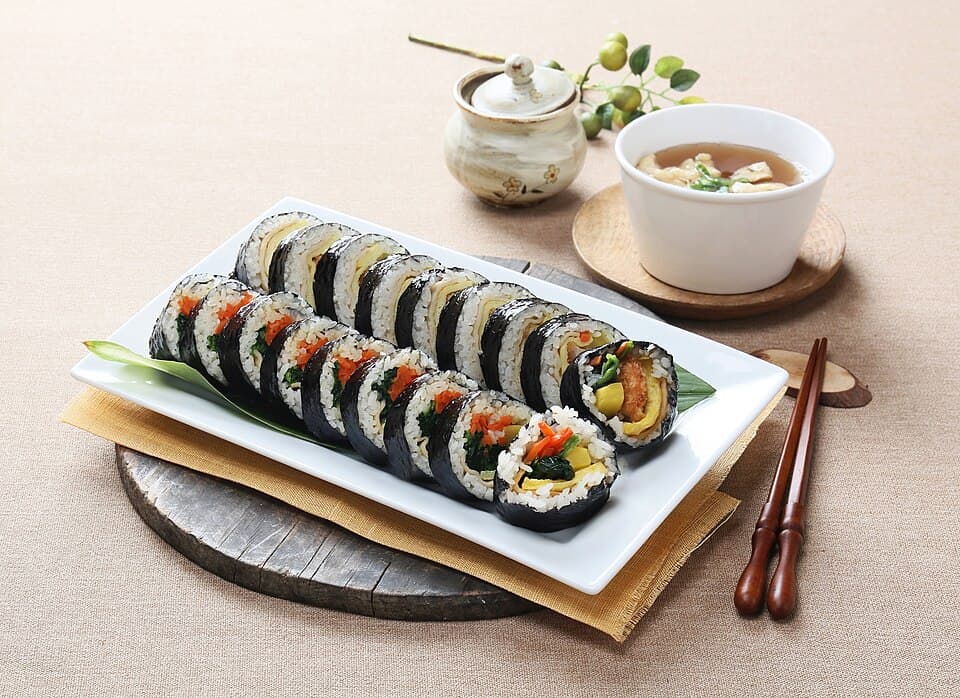
Gimbap김밥
Seaweed Rice Roll
Rice and fillings such as pickled radish, spinach and egg, rolled in dried seaweed and sliced.
History & stories
Wrapping rice in seaweed is an old habit in Korea. On the first full moon of the lunar year, people ate bokssam, "fortune wraps" of rice folded in leafy greens or gim (laver). The 18th-century scholar Yi Deok-mu even included table manners for it in his conduct book Sasojeol: don't build your lettuce or seaweed wrap directly on your palm, because it looks untidy. Seaweed wraps also appear in the classic folk tale Simcheongjeon.
The rolled gimbap (김밥) we know today, with rice spread on a sheet of gim and fillings rolled up inside, is described as a localized form of Japanese norimaki that arrived during the Japanese colonial period. Early versions seasoned the rice with sweet vinegar, but over time sesame oil became the essential seasoning, and gimbap went its own way.
It was a picnic food from early on. A 1925 newspaper recommended gimbap for lunch on school outings, and a 1939 article suggested it for lunch boxes. By the 1950s and 60s it showed up often in serialized newspaper novels, a sign of how common it had become, and the gimbap shops and franchises of the 1990s made the fillings more varied than ever.
Change history
From the community
Kinds · Pick a kind to see posts about it.