#085
Bingsu빙수
Shaved Ice Dessert
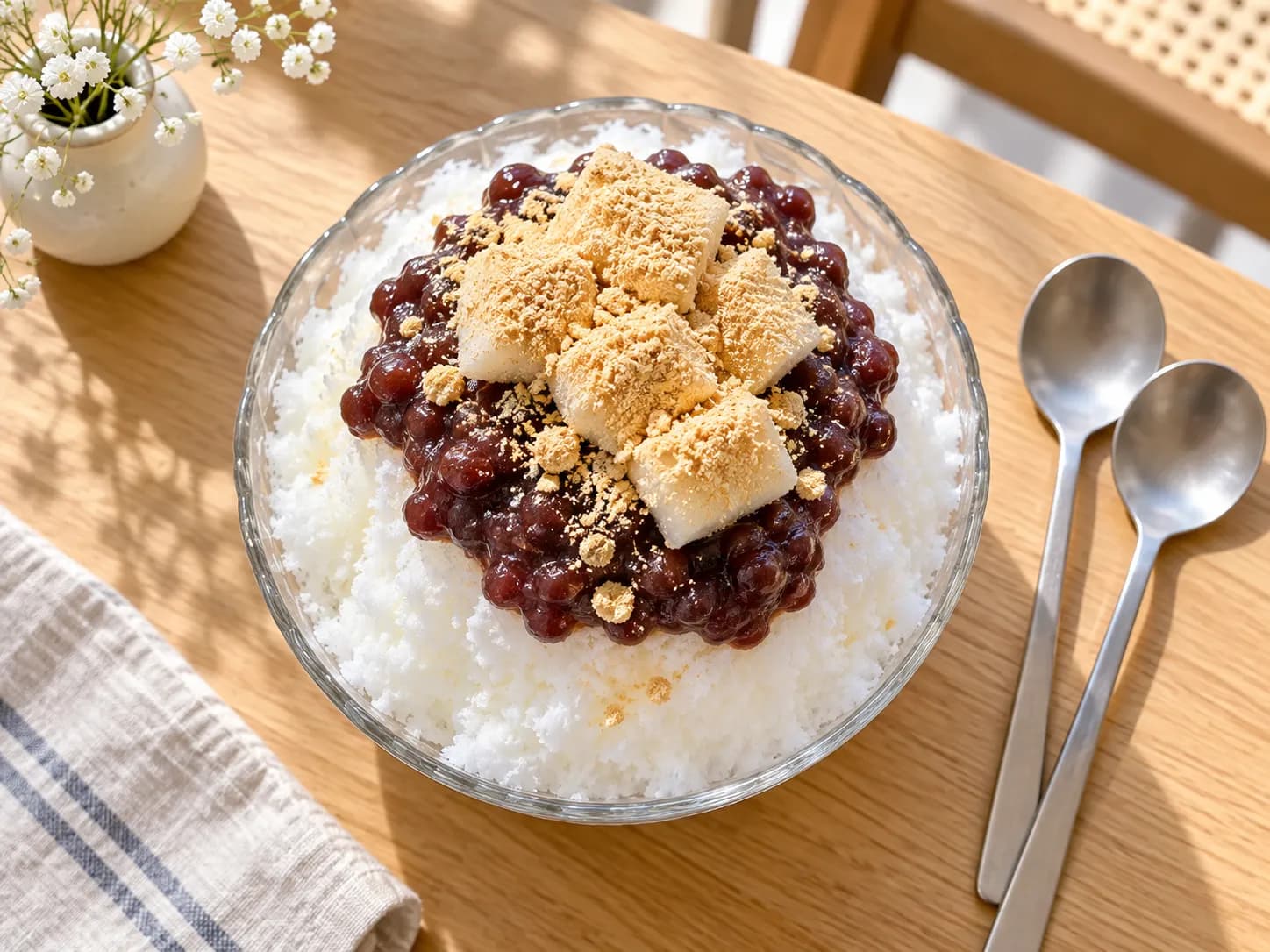
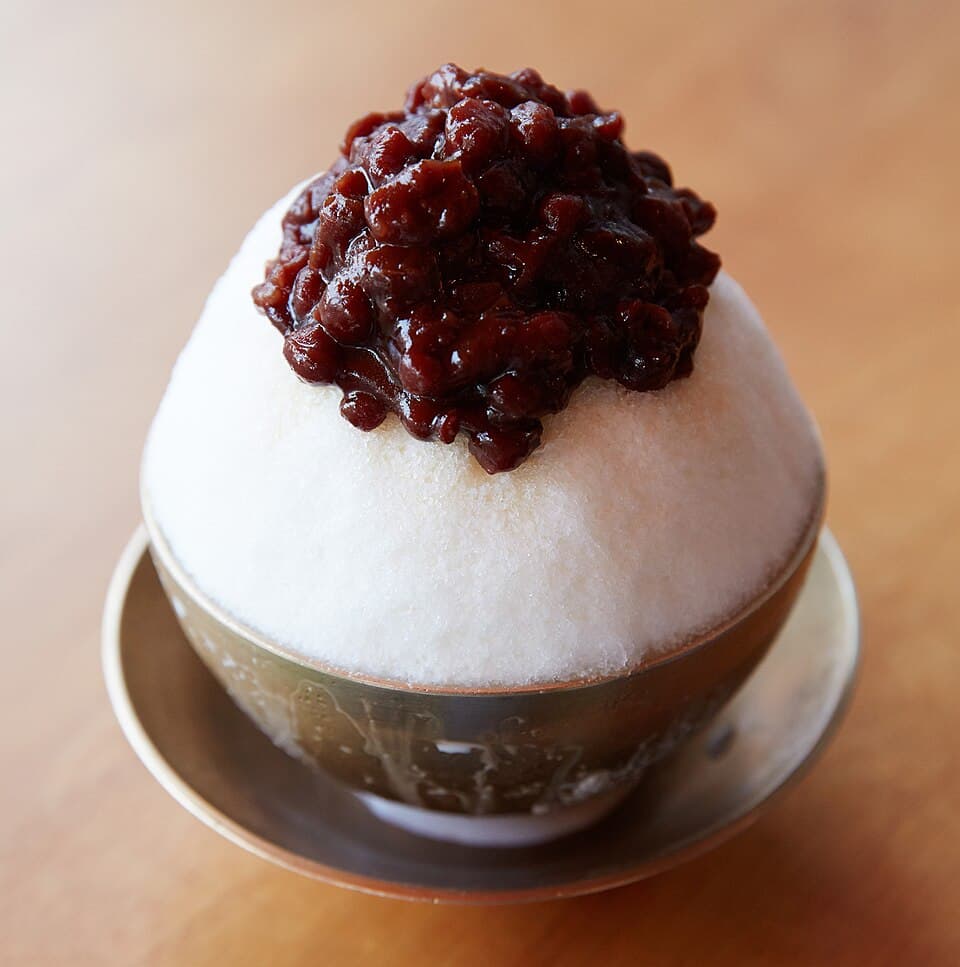
Finely shaved ice topped with sweet red beans, fruit or condensed milk.
History & stories
In the Joseon era, ice was a luxury few could enjoy. It is said you could taste it only if the king granted it, and those who did were mostly officials, the elderly and the sick. After natural-ice companies were founded in Gyeongseong (today's Seoul) in 1913, restaurants also sold bingsu (빙수) in summer, and by 1921 the city had 417 bingsu shops, 187 run by Japanese and 230 by Koreans. Because some vendors used non-food ice, such as ice meant for keeping fish, stomach upsets were common, and that year the colonial Government-General issued rules on handling ice.
Bang Jeong-hwan, the writer who founded Korea's Children's Day, was a famous bingsu lover. In a 1929 essay titled 'Bingsu' in the magazine Byeolgeongon, he argued that the true taste of ice lies not in ice cream or milkshakes but in freshly shaved ice, and that bright red strawberry syrup brings that taste out best. His family later recalled that he would eat seven or eight bowls a day at home.
After the Korean War, condensed milk and chocolate syrup broadened the flavors, and in the 1980s a version close to today's patbingsu, with sweet red beans, rice cake and jelly on the ice, spread widely. In the 2010s, as dessert cafes multiplied, snowflake bingsu, made from milk ice shaved as fine as snow, became the new favorite.