
#082
Twigim튀김
Korean Fritters
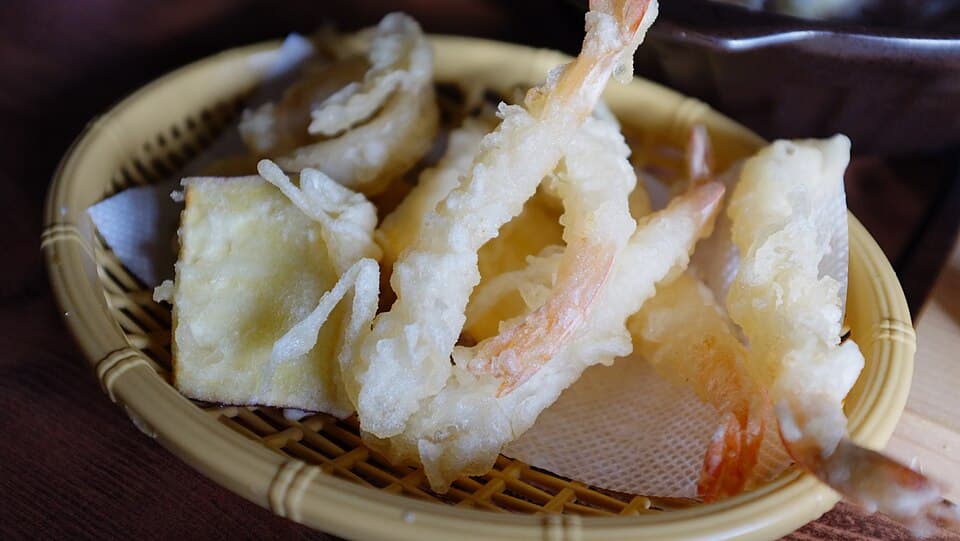
Battered and deep-fried vegetables, squid or seaweed rolls, often dipped in tteokbokki sauce.
History & stories
In traditional Korean cooking, oil was mostly used for pan-frying, as with jeon and jeonbyeong; deep-fried foods were limited to a few, such as yakgwa, gangjeong, bugak and twigak. Deep-frying was originally a technique much used in Buddhist temples, and twigak, fried kelp, is still regarded as a signature temple dish. One guess is that monks, who faced many restrictions on ingredients, developed cooking that used plenty of oil. Bugak is another old fried food: perilla leaves or laver are brushed with glutinous rice paste, dried, and fried just before eating.
Battered tempura (덴푸라) was already well enough known in the colonial period for newspapers to print recipes. A 1939 newspaper admitted it was hard to fry tempura well at home and even advised that well water made better batter than tap water. In Korea the word tempura was also used for fish cake, reportedly because fish cake was fried in oil and the two got mixed up.
Early frying fat was lard from U.S. military bases, but from the 1960s on, cooking oil made from soybeans and corn became widely available. From the 1960s, too, Seoul's pojangmacha street tents served as snack bars and drinking spots selling noodles, sundae, tteokbokki and twigim (튀김). Mixed vegetables, squid legs and sweet potato were favorites, and in the 1970s and '80s, fish-cake fritters fried on the spot in markets were a popular snack and side dish.