
#007
Ssambap쌈밥
Leaf Wraps with Rice
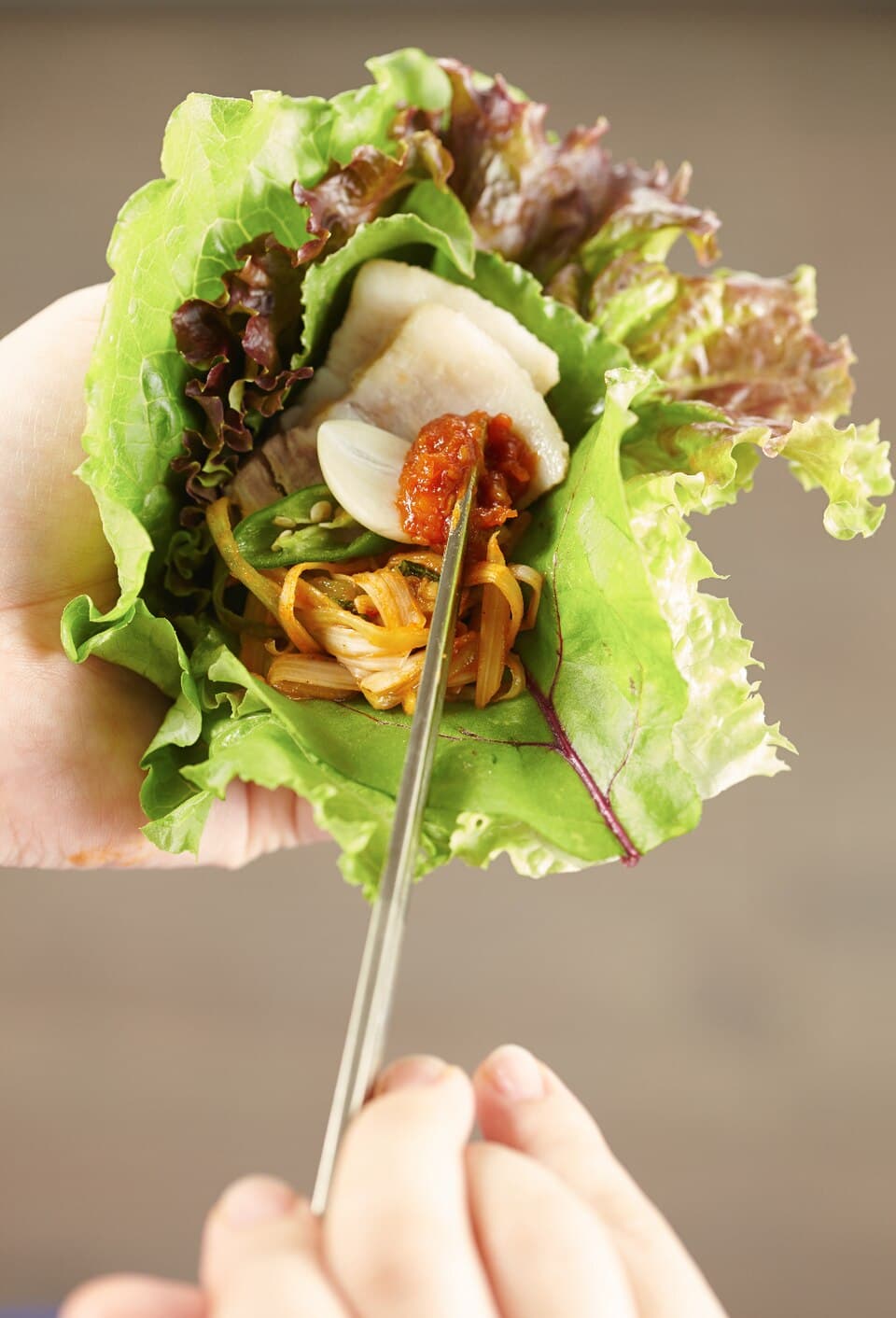
Rice wrapped in lettuce and other leaves with ssamjang and side dishes.
History & stories
Wrapping rice in leaves is an old Korean habit. One story from the late Goryeo period tells of Goryeo women at the Yuan court in China who planted lettuce in the palace gardens and wrapped rice in it to ease their homesickness, a custom said to have caught on among the Mongols as well. The Yuan poet Yang Yunfu praised Goryeo lettuce in verse and added a note that "the people of Goryeo wrap their rice in raw greens." In the late Joseon era, the writer Yi Ok described a summer lettuce wrap so lovingly that, chewed slowly, it was sweet and fresh and left nothing more to wish for.
Funnily enough, when the word ssambap (쌈밥) first appeared in print, in a 1930 newspaper, it meant something else: a teacher at a girls' school in Seoul used it for sushi, vinegared rice rolled in seaweed. From the 1960s it became popular to wrap bulgogi or raw fish in lettuce, but people still spoke of "wrapping ssam," not of eating ssambap.
The word took on its current meaning, rice and side dishes wrapped in leafy greens, only after the 1990s, when interest in vegetable-centered meals led to a wave of restaurants specializing in ssambap and the name became everyday Korean. Since the 2000s, the Korean way of wrapping rice, meat, garlic, chili and ssamjang in fresh leaves has also caught on overseas along with the Korean Wave.