
#044
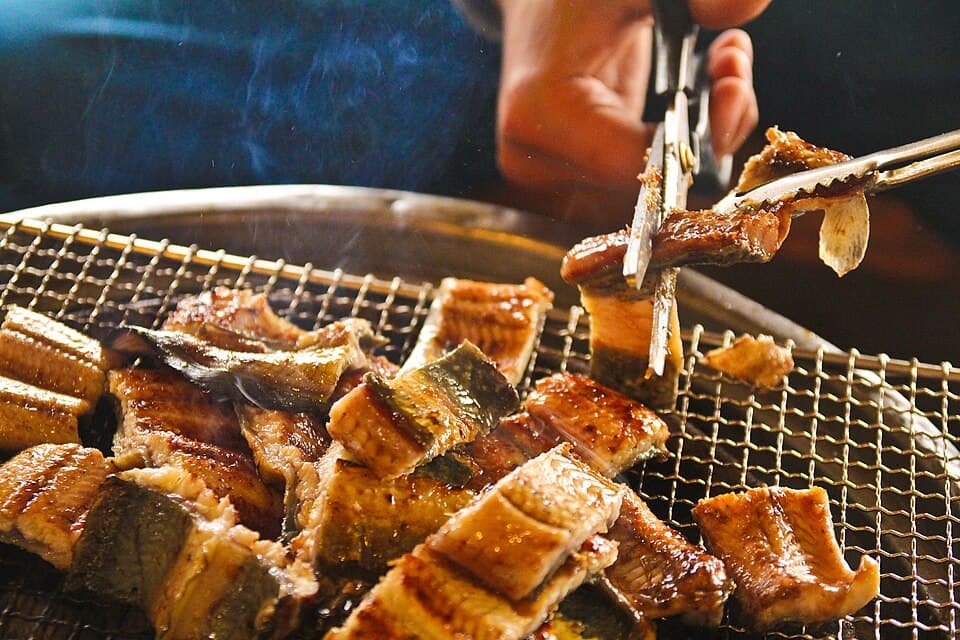
Jangeo-gui장어구이
Grilled Eel
Freshwater eel grilled plain or with a sweet soy glaze.
History & stories
The freshwater eel used for jangeo-gui (장어구이) is the Japanese eel. It spends five to twelve years growing in rivers before heading out to sea to spawn, a journey said to take it across the Yellow Sea and on to the deep Pacific. The young eels hatched there then find their way back to Korea's rivers. In Jasan Eobo, a catalogue of marine life, the Joseon scholar Jeong Yak-jeon described the eel as snake-like but shorter and darker, and noted that unlike other fish it moves about readily even out of the water.
For many Koreans, grilled eel means Pungcheon jangeo from Gochang in North Jeolla. The name refers to eels living around Seonunsan mountain, where river water meets the sea, and they have long been counted among the area's three famous products along with jakseol green tea and bokbunja (Korean black raspberry) wine. They are usually grilled over charcoal, and food lovers are said to regard grilled eel with a glass of bokbunja wine as one of life's great pleasures.
Eels used to come from the rivers, but most served today are farmed. Korea's eel farming began in 1966 in Noksan, Gimhae. In the 1970s more people took up eel farming and exported to Japan and Taiwan, and from the late 1970s farming eels for the table took off, with production growing steadily.