
#009
Hobak-juk호박죽
Pumpkin Porridge
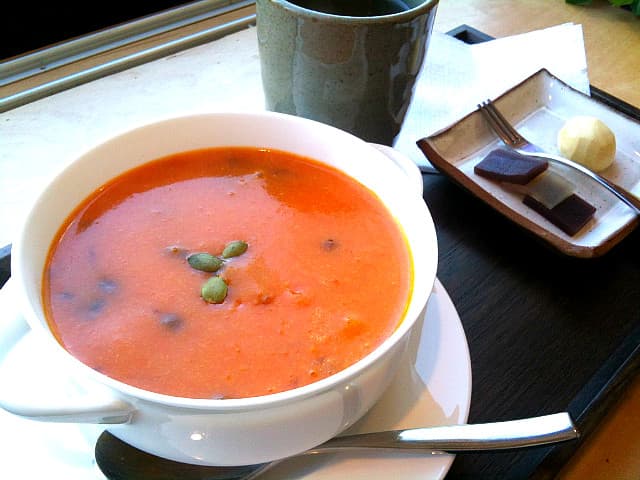
Smooth, mildly sweet porridge made from pumpkin and glutinous rice flour.
History & stories
Pumpkins are thought to have reached Korea after the Imjin War of the 1590s. Accounts differ on the route: one view holds that they came via Japan, another that envoys returning from Qing China in the mid-17th century brought them back. At first they were grown mostly at Buddhist temples, which is said to have earned them the nickname seungso (僧蔬), "monks' vegetable." One theory even links the name hobak to the character ho (胡), used for peoples to the north, as if to say "the gourd that came from the northern tribes."
Pumpkins grow well in poor soil and keep for a long time, so by the late Joseon period they had become an everyday food for ordinary people and helped see them through famine years. A ripe pumpkin kept in a warm room would last all winter. Old texts use the names hobak-juk (호박죽, pumpkin porridge) and hobak-beombeok almost interchangeably; beombeok is made much the same way but cooked down thicker than porridge.
What went into the porridge varied by text and region, from wheat flour and kidney beans to glutinous rice flour and red beans. In Chungcheong Province, where people were especially fond of cooking with ripe pumpkin, a hearty beombeok loaded with red beans, soybeans, chestnuts and sweet potatoes was a favorite alongside the porridge. The version most people eat today is made by boiling ripe pumpkin until soft, mashing it smooth and thickening it with glutinous rice flour, sometimes with cooked beans or little rice-cake balls added.
