
#041
Gopchang-gui곱창구이
Grilled Beef Intestines
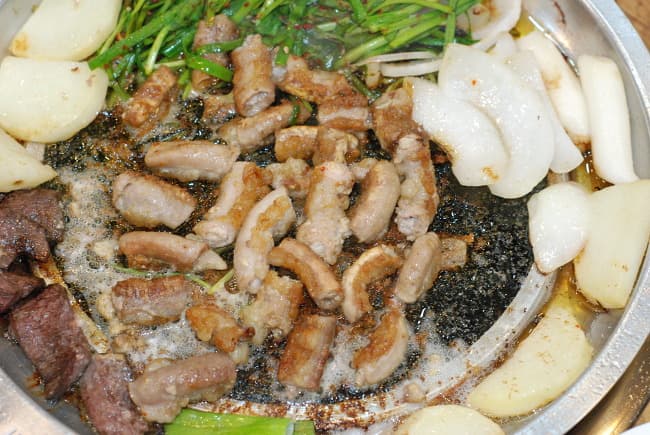
Chewy small intestines grilled at the table until crisp.
History & stories
Slaughterhouses played a big part in turning grilled gopchang into a favorite drinking snack. Offal spoils quickly and has to be dealt with fast, so restaurants serving it gathered around slaughterhouses, where they could get fresh by-products from that day's work.
In Seoul, gopchang restaurants began appearing one by one in Wangsimni, now famous for its gopchang street, in the early 1980s, thanks to the nearby Majang-dong slaughterhouse. The slaughterhouse closed in 1998, but the restaurants' ties to the Majang-dong livestock market reportedly carried on.
Daegu is often credited with making grilled gopchang and makchang famous nationwide. The era of grilled offal there began in 1970, when the local slaughterhouse became a municipal facility. One story tells of a restaurant owner in the early 1970s who first served makchang as a soup; when drinkers were unimpressed, she put it on a grill over coal briquettes instead, and it became a hit. At Anjirang Market, which formed in the 1970s when a valley stream below Apsan Mountain was covered over, a shop started grilling intestines tossed in garlic and chili seasoning over briquettes in 1979. The alley now holds about 60 restaurants and mostly uses pork intestines, while the gopchang alley in Jungni-dong, where a slaughterhouse once stood, has long used beef.