
#022
Doenjang-jjigae된장찌개
Soybean Paste Stew
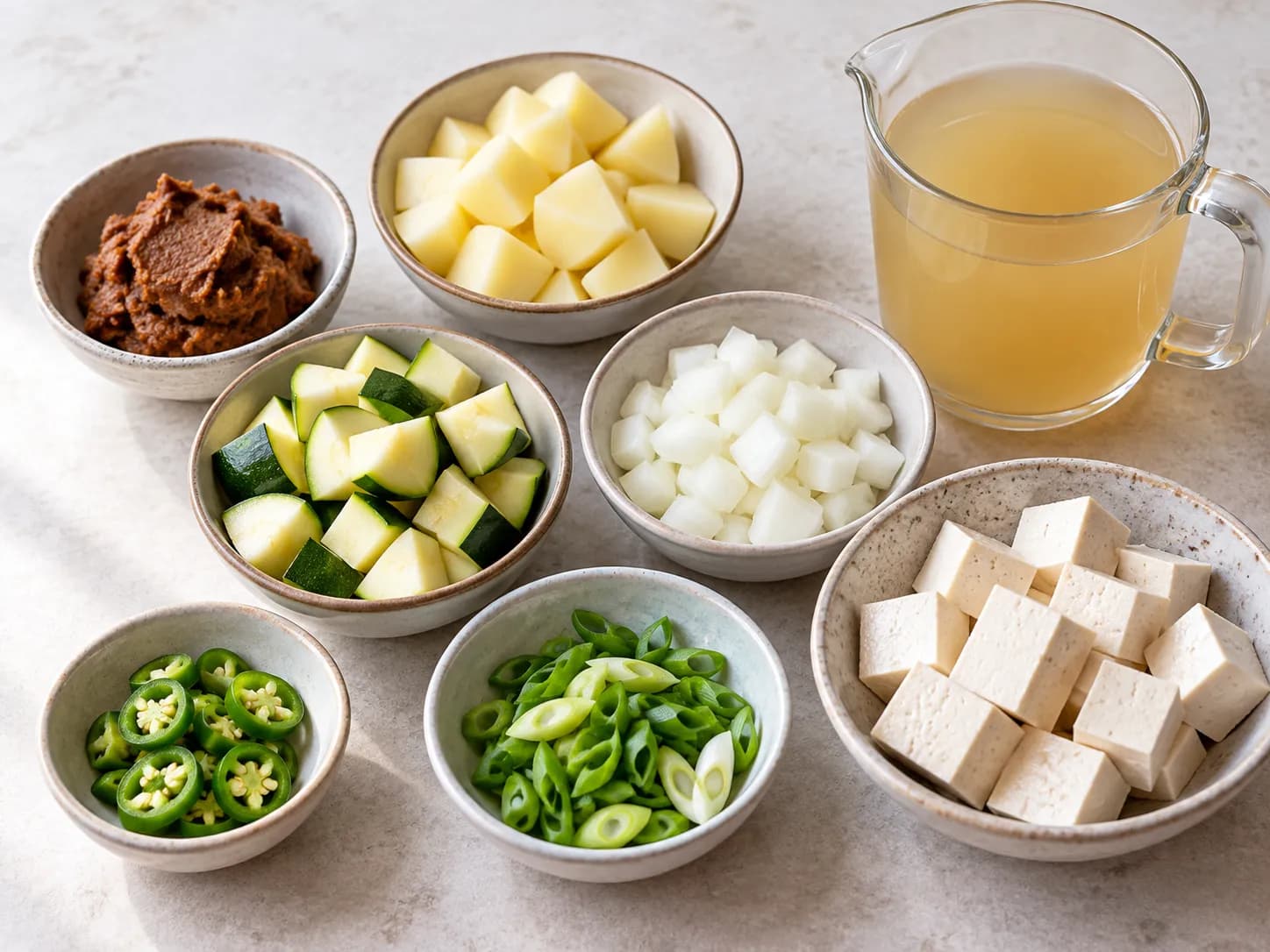
An everyday stew of fermented soybean paste with tofu, zucchini and potato.
History & stories
The fermented soybean pastes behind doenjang-jjigae (된장찌개) go back a very long way. Samguk Sagi records that when King Sinmun of Silla took a queen, the betrothal gifts included jang (soybean sauce) and meju (fermented soybean blocks). Early jang was probably a thick mix of soy sauce and paste, and the practice of separating ganjang (soy sauce) from doenjang (soybean paste) is thought to date from the Joseon period.
The word for stew itself shows up surprisingly late. It first appears, under the name jochi, in Siuijeonseo, a late-19th-century cookbook, and no one knows exactly when jjigae split off from guk, Korea's soups. Some scholars point to the distinction between tang and gaeng in the earlier Jeungbo Sallim Gyeongje to argue that soups and stews were told apart sooner. The Joseon court is said to have served two kinds of jochi, a clear one and one made with soybean paste, at the king's table. Up to the Japanese colonial period, doenjang-jjigae was reportedly made with oil and meat, quite unlike today's version.
Doenjang-jjigae is also a stew that follows the seasons: green chili peppers in summer, mushrooms in autumn, dried radish greens in winter. On Jeju Island, people saved shiitake stems and simmered them with shark bones in doenjang broth.