
#091
Dasik다식
Tea Cookies
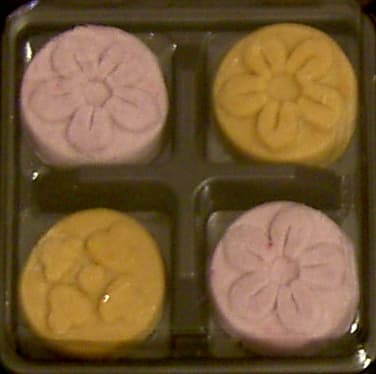
Pressed cookies of grain or pine pollen powder and honey, made in patterned molds.
History & stories
Dasik (다식, 茶食) has the character for "tea" in its name, yet there is no tea in it. The Joseon scholar Yi Ik explained why in his miscellany Seongho Saseol. In Song-dynasty China, tea leaves were steamed and pressed into patterned molds to make tea cakes, which were ground and whisked into hot water at ancestral rites. Over time, grain powder kneaded with honey took the tea's place in the molds and was used as a ritual offering, so only the name survived. Nobody knows exactly when dasik began, but a poem in Mogeunjip, the collected works of the Goryeo scholar Yi Saek, praises the soft, pleasant dasik served at the Palgwanhoe festival.
In the Joseon period, dasik was a must on ancestral-rite tables and wedding feast tables. Yellow pine-pollen dasik, green bean dasik, golden rice dasik, black sesame dasik and pink starch dasik were stacked high together for a dazzling display. Pine-pollen dasik is also known as a local specialty of Gapyeong in Gyeonggi Province.
What gives each cookie its face is the dasikpan, a long wooden mold carved with characters such as 壽 (long life), 福 (fortune), 康 (health) and 寧 (peace), or with flowers. Because families needed them for every feast and memorial rite, the molds were handed down through the generations. Some are carved with the date they were made or the owner's name, and a few even bear a warning not to lend them out.