
#036
Chueotang추어탕
Loach Soup
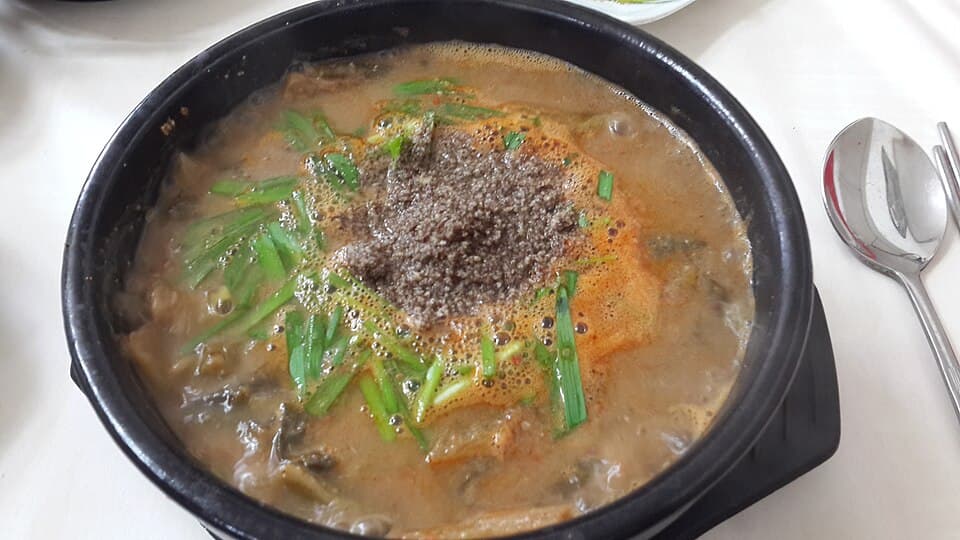
A thick, earthy soup of ground mudfish and greens. A restorative dish.
History & stories
The Chinese character for loach, 鰍, joins "fish" (魚) with "autumn" (秋). One theory says the second part imitates the sound a loach makes; another says it's because loaches are plumpest and tastiest in autumn. When the Song dynasty envoy Xu Jing wrote about Goryeo after his 1123 visit, he put the loach first on his list of seafood eaten by poor people. Easy to catch in rice paddies and streams, it was most likely a common people's food from early on.
Joseon-era cookbooks don't mention chueotang by name, but the 19th-century scholar Yi Gyu-gyeong recorded chudubutang, a loach-and-tofu soup, in his Ojuyeonmun jangjeon sango. Loaches and tofu went into a pot together, and as the water heated the loaches burrowed into the tofu. The tofu was then sliced, pan-fried and made into a soup that he called delicious and said was in fashion among Seoul's banin (泮人), the townspeople living around the national academy. Seo Yu-gu's Nanho eomokji describes country people letting loaches spit out their mud in clean water before making them into soup.
Today there are two main styles: Seoul's, with the loaches left whole, and the southern style, where they are boiled and strained or ground, then cooked with dried radish greens, doenjang, perilla and chopi pepper. Namwon in Jeonbuk is the best-known home of the southern style. Its loach soup began to win fame after a restaurant opened near Gwanghallu Garden in 1959, and the area was designated a food theme street in 2012.