
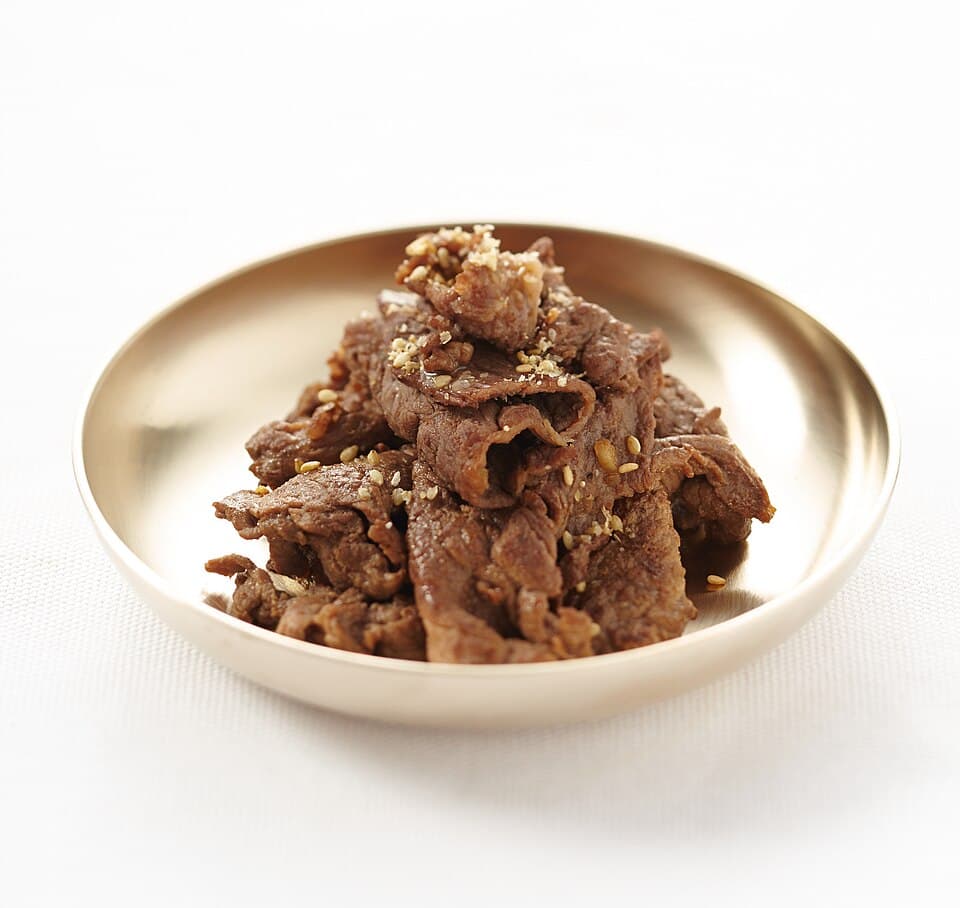
#038
Bulgogi불고기
Marinated Grilled Beef
Thin slices of beef marinated in soy sauce, sugar and sesame oil, then grilled or pan-cooked.
History & stories
Bulgogi's family tree is usually traced back to maekjeok (맥적). According to the Encyclopedia of Korean Culture, Korea's traditional grilled meats descend from this dish; "Maek" was a name for northeast China and referred to the ancient kingdom of Goguryeo. Maekjeok was meat threaded on skewers and roasted over an open flame. One theory holds that once the wire grill came into use, the skewers were no longer needed, and the dish gradually became the bulgogi we know today.
In earlier times the dish was called neobiani (너비아니), a word used at the royal court and in aristocratic households in Seoul, meaning meat sliced wide and thin. The charcoal tradition lives on in regional styles. Gwangyang bulgogi is thinly sliced, seasoned beef grilled over oak charcoal, while Eonyang bulgogi, from Ulsan, is coarsely cut beef cooked on a wire grill lined with water-soaked hanji paper.
Seoul went its own way with a juicier, broth-based version. A Seoul restaurant that opened in 1939 is often named as the originator of Seoul-style bulgogi. It first sold neobiani and janggukbap (rice in beef broth), then reworked the recipe so it could be cooked easily and eaten quickly, simmering the marinated meat together with broth. It is a good reminder that one dish can look quite different depending on where in Korea you order it.
