#080
Bindae-tteok빈대떡
Mung Bean Pancake
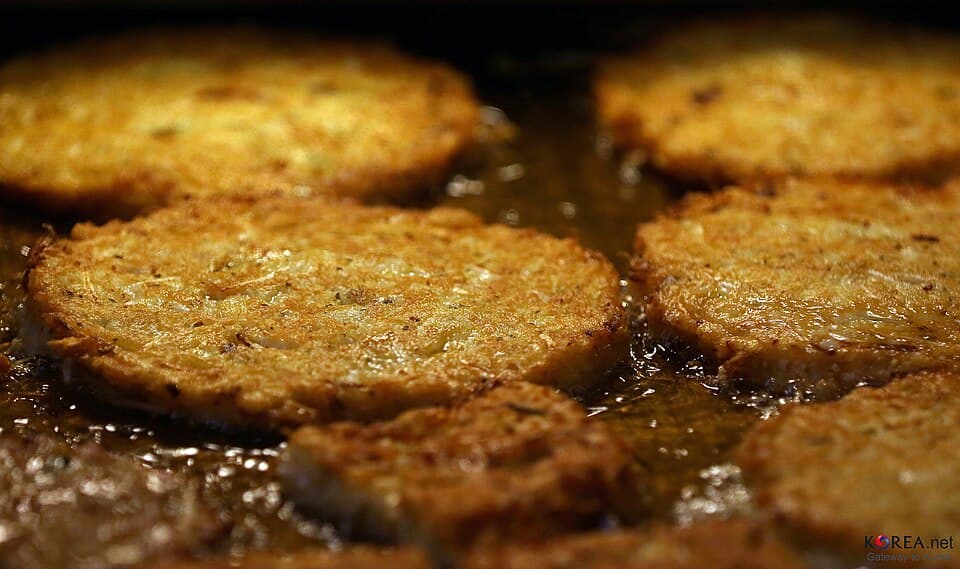
A thick, crispy pancake of ground mung beans, pork and vegetables.
History & stories
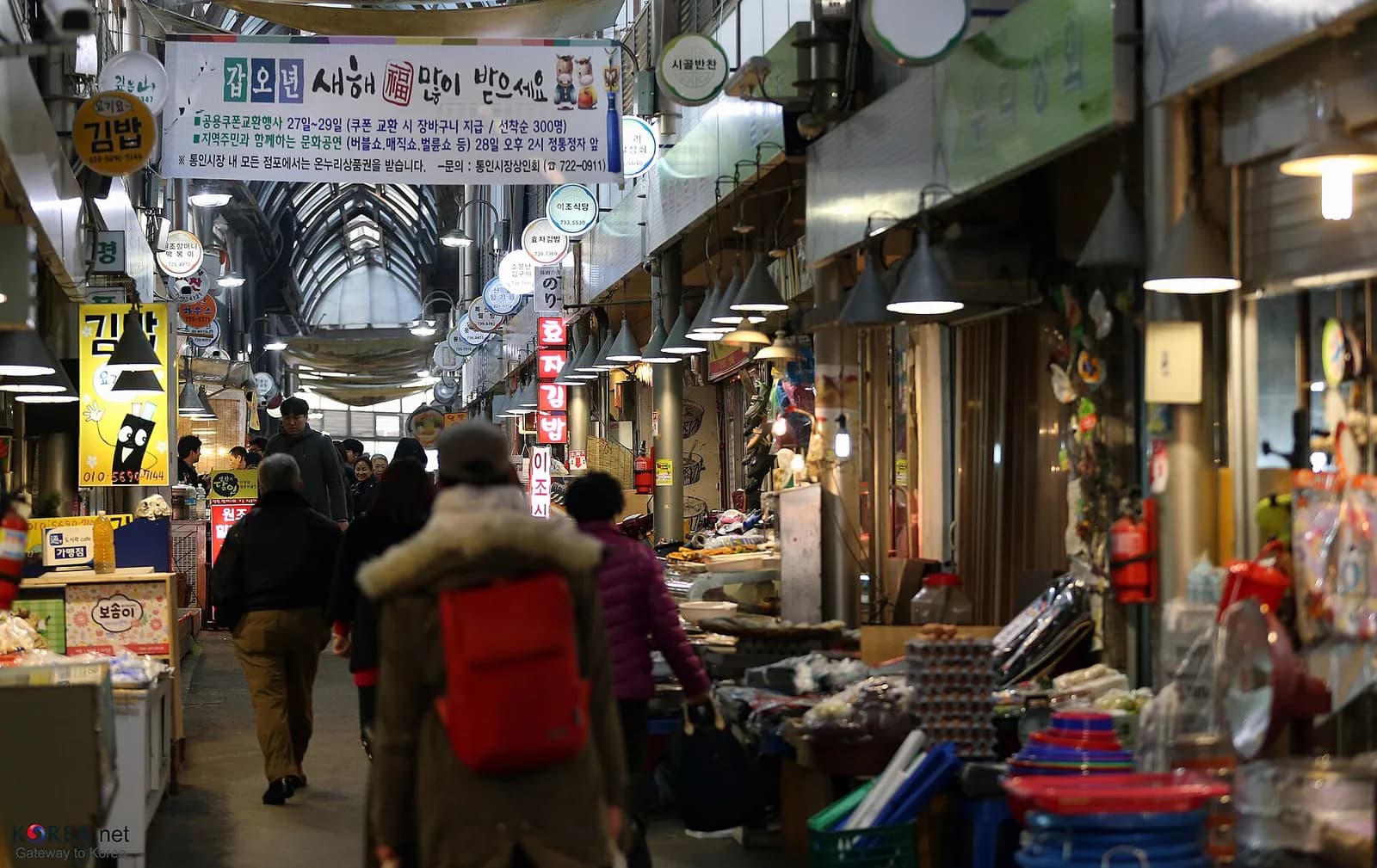
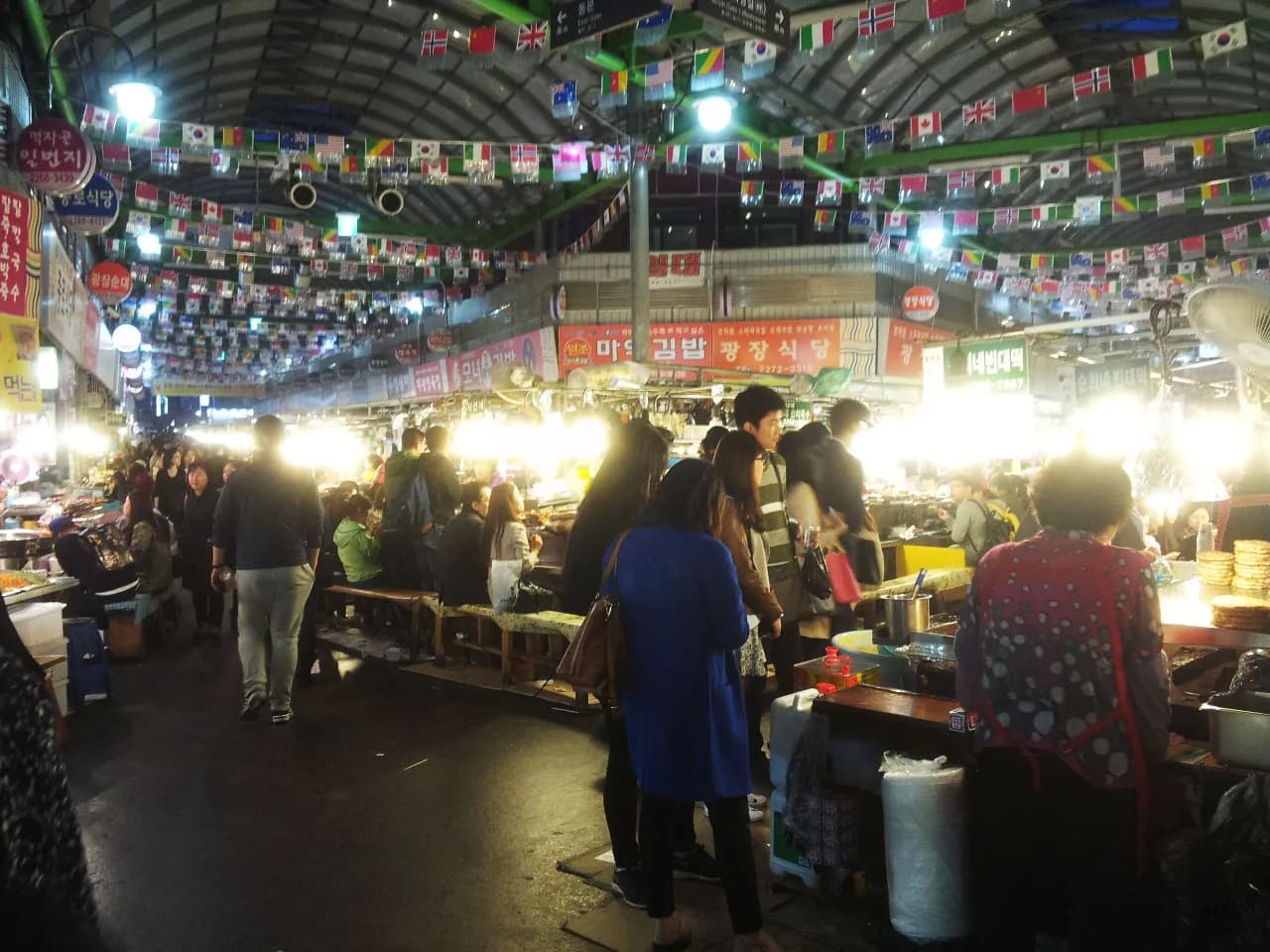
Bindae-tteok (빈대떡) is also called binja-tteok, and there are several theories about the name. One guess is that byeongjabyeong (餠子餠) slowly became binja-tteok and then bindae-tteok, while the book Joseon sangsik suggested it came from the Chinese pronunciation bingja. A popular story says the pancake was first used as a base for stacking fried meat on ritual and feast tables, then became a dish of its own for the poor, hence binja (貧者), meaning poor people. Another says Seoul's Jeong-dong, nicknamed Bindae-gol (Bedbug Village) because of its many bedbugs, had lots of binja-tteok sellers, and the name stuck.
The old version was quite different. The cookbook Gyugon siuibang describes frying spoonfuls of thick batter made from hulled mung beans, topping them with red-bean filling mixed with honey, then covering that with more batter. Gyuhap chongseo went further, studding the top with pine nuts and jujubes to look like a flower. It was closer to a sweet, showy rice cake; today it is seasoned with salt, filled with meat and vegetables, and eaten more like a side dish.
One story says that in famine years during the Joseon period, powerful families made these pancakes and threw them to the wanderers gathered outside Namdaemun gate, calling out which household the charity came from. In Pyeongan Province, bindae-tteok was a local specialty, said to be about three times the size and twice the thickness of the Seoul version.