
#058
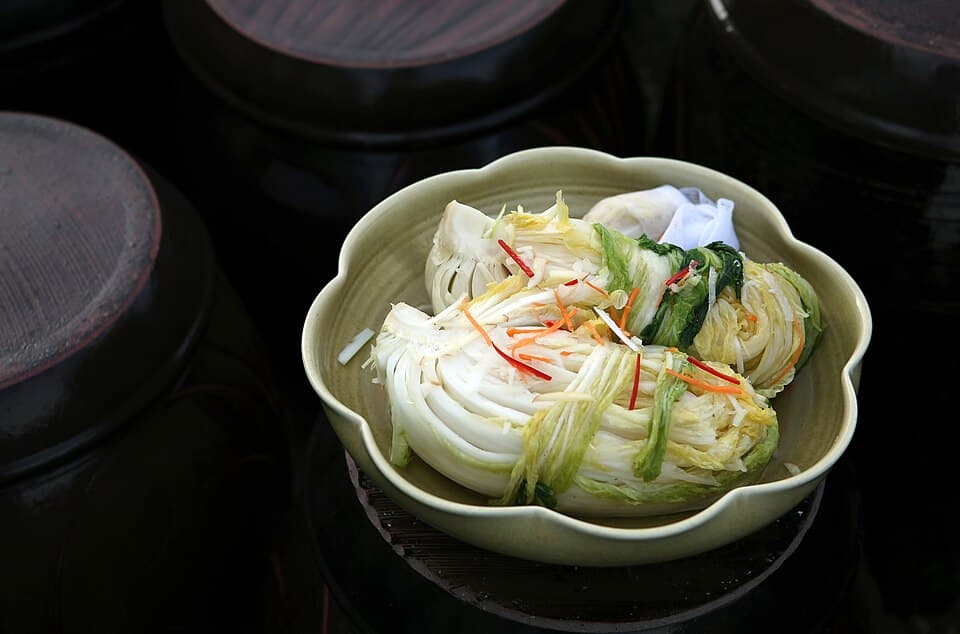
Baek-kimchi백김치
White Kimchi
A mild, non-spicy kimchi with a clear, refreshing brine.
History & stories
Baek-kimchi (백김치, "white kimchi") is usually described as the signature kimchi of Pyeongan Province in the North, a region known for cold winters and good water. Filling was tucked between the cabbage leaves, the heads were wrapped in their outer leaves and packed into crocks, and after three or four days salted water or a simmered beef broth was poured in. Chili went in as fine threads rather than powder, which keeps the color pale. It is also the kimchi many families make for young children who can't handle spicy food.
Interestingly, white kimchi was not always a separate category. Until the first half of the 20th century, the way Seoul and Gyeonggi households made whole-cabbage kimchi was not very different, and the line between the two was blurry. The name "baek-kimchi" first appears in a 1924 newspaper article, but descriptions of its form and method only show up in records from the 1960s onward. That is why some researchers see white kimchi as the original form of whole-cabbage kimchi, with the two splitting apart as more and more chili powder went into the red version.
The split became clear after the Korean War. In the South, whole-cabbage kimchi took on more chili powder and stopped being topped up with brine, so the mild, brothy style without chili powder settled in as its own kimchi, baek-kimchi. From the 1970s, homes without yards and the growth of industrial chili grinding also helped red kimchi become the norm. In Jeolla Province, white kimchi was sometimes called baechu-dongchimi, "cabbage dongchimi."